There's a particular kind of anticipation that builds in early spring, especially if you have kids. The mornings are lighter, the air smells different, and suddenly you're thinking about pastel colors and hidden eggs and what to tuck into those baskets this year. It's not about the grand gesture—it's about the small details that make Easter morning feel special without the chaos of too much sugar or plastic that breaks by lunchtime.
Filling an Easter basket used to feel straightforward. You'd grab some chocolate bunnies, a stuffed animal, and call it done. But now there's a shift toward baskets that feel more intentional—gifts that kids will actually use, items that don't just fill space, and ideas that work for different ages without relying entirely on candy. It's not about perfection. It's about putting together something that feels right for your child, your budget, and your home.
The best baskets feel personal. They're not identical to what everyone else is doing, and they don't require a trip to five different stores. They work with what you already know your child loves, and they add a few small surprises that make the morning feel warm and remembered.
Small Books That Get Read Again and Again
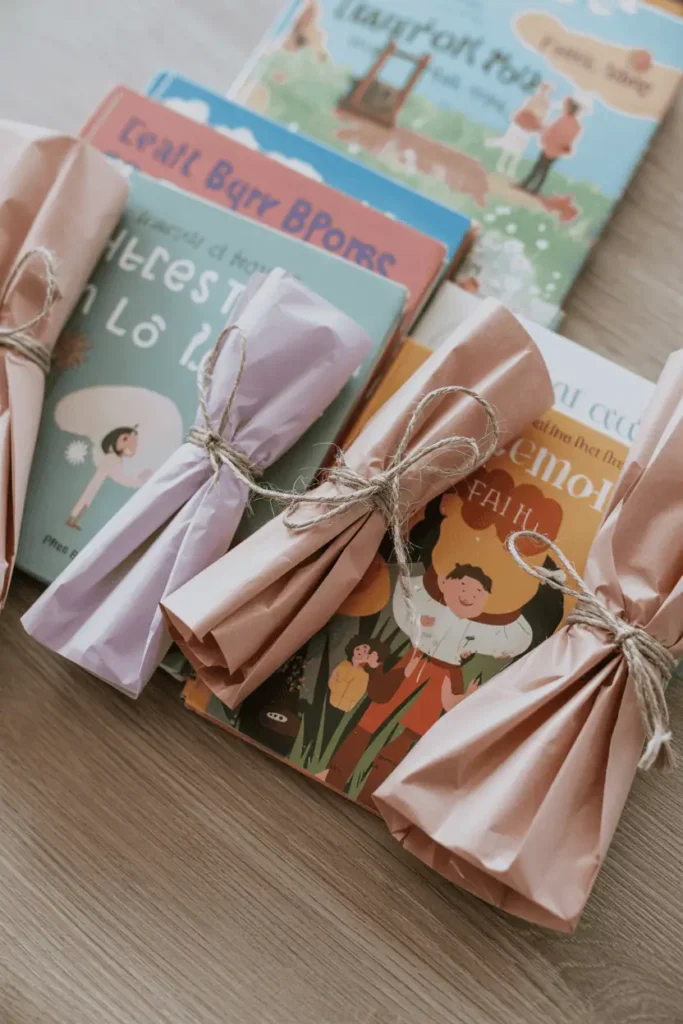
Books make excellent basket additions because they don't get used up in one sitting. A new board book for a baby, a short chapter book for an early reader, or a graphic novel for a tween all work beautifully tucked into a basket alongside other small items.
Choose books with spring themes if you want them to feel seasonal—stories about gardens, animals, or rainy days. But any book your child would genuinely enjoy works just as well. The goal is to add something they'll return to, not something that matches a theme perfectly but never gets opened.
Wrap books in tissue paper or tie them with a ribbon to make them feel more like a gift. Even a familiar format feels special when it's presented thoughtfully.
Art Supplies That Encourage Quiet Creativity
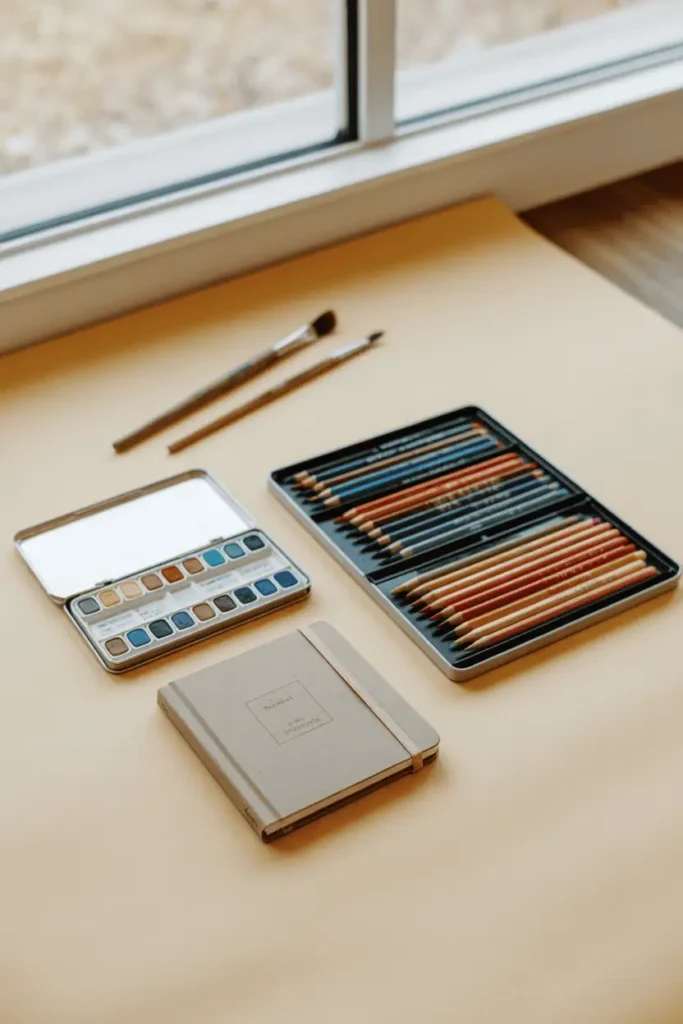
Crayons, colored pencils, small watercolor sets, and sketchbooks all fit easily into baskets and get used long after the holiday. These items work especially well for kids who need independent activities or enjoy creating without a screen.
Look for compact sets that don't take up too much space. A tin of watercolors, a small pad of paper, and a few quality colored pencils feel more intentional than a giant bucket of markers that will dry out. Quality over quantity makes a difference here.
Art supplies also work across a wide age range. A toddler can scribble with chunky crayons, while an older child might appreciate fine-tipped pens or specialty paper. Tailor the supplies to what your child actually uses, not what looks good in the basket.
Outdoor Play Items for Warmer Days Ahead
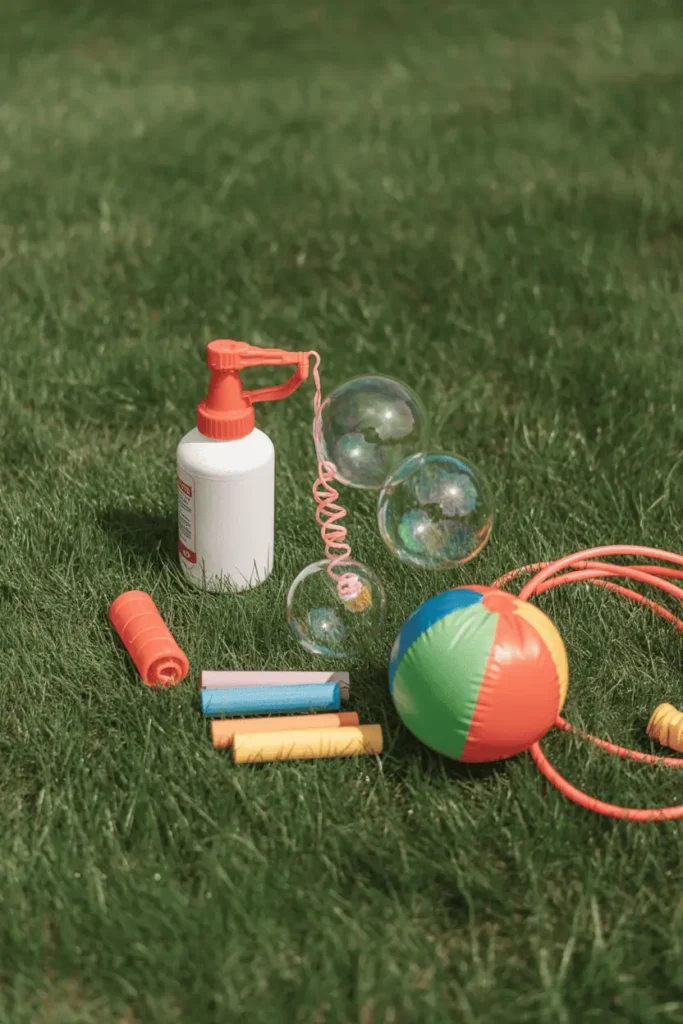
Easter falls at a time when kids are itching to be outside more. Small outdoor toys—sidewalk chalk, bubbles, a kite, a jump rope, or a small ball—fit the season and encourage active play.
These items don't need to be expensive or elaborate. A simple bottle of bubbles and a good bubble wand can entertain a toddler for weeks. Sidewalk chalk works for all ages and washes away with the next rain. A classic jump rope or a small inflatable ball takes up minimal space but gets daily use.
Outdoor items also help balance out any candy or treats in the basket. They give kids something to do with their energy after the initial excitement of the morning settles.
Practical Items Disguised as Treats
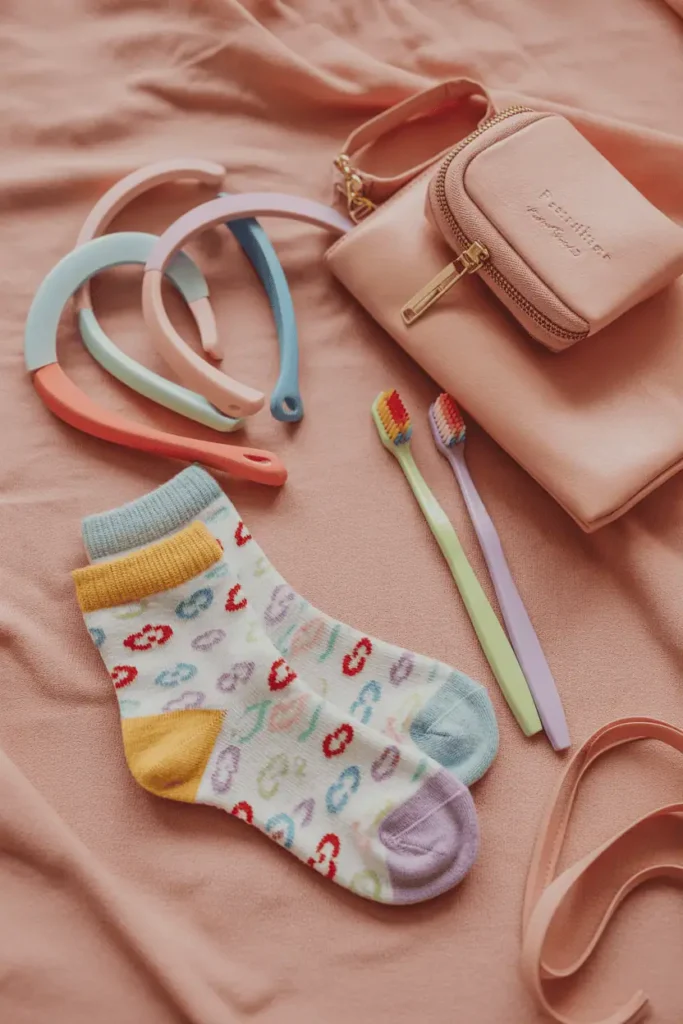
Socks, hair accessories, small pouches, or a new toothbrush in a fun color can all feel special when tucked into a basket with care. Kids don't always see these as boring—especially younger ones who don't yet have strong opinions about practicality versus novelty.
A pair of socks with a favorite character or pattern, a set of colorful hair ties, or a small zippered pouch for collecting treasures all work. These items get used regularly, which means they don't contribute to clutter the way single-use toys often do.
Keep in mind: Practical gifts work best when they're mixed with a few purely fun items. A basket that's only socks and underwear might not land the way you hope.
DIY Baskets That Feel Personal
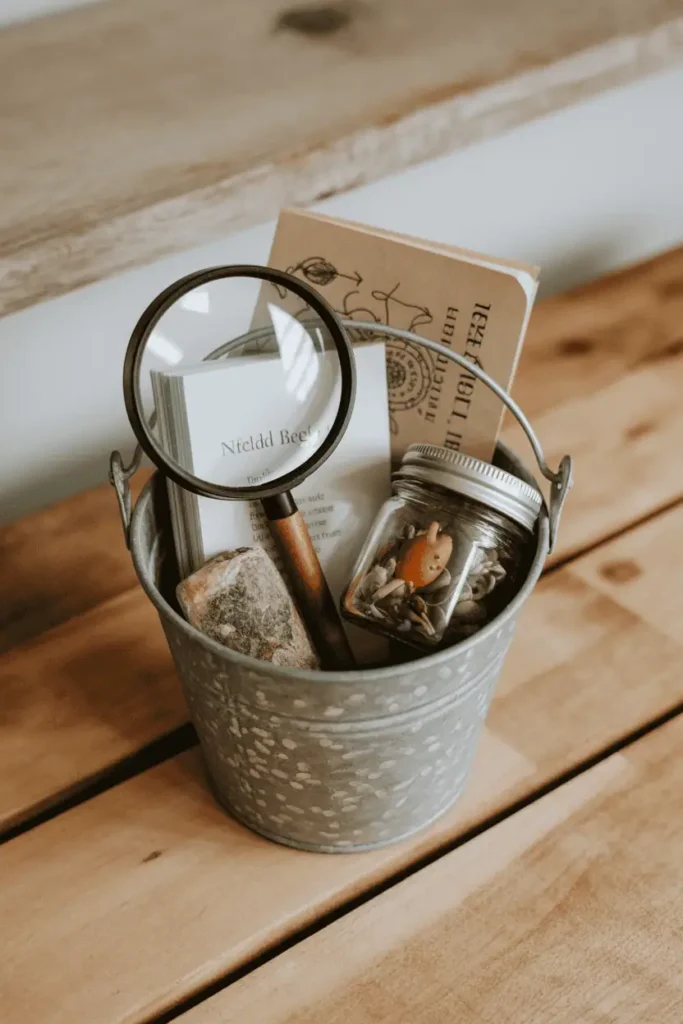
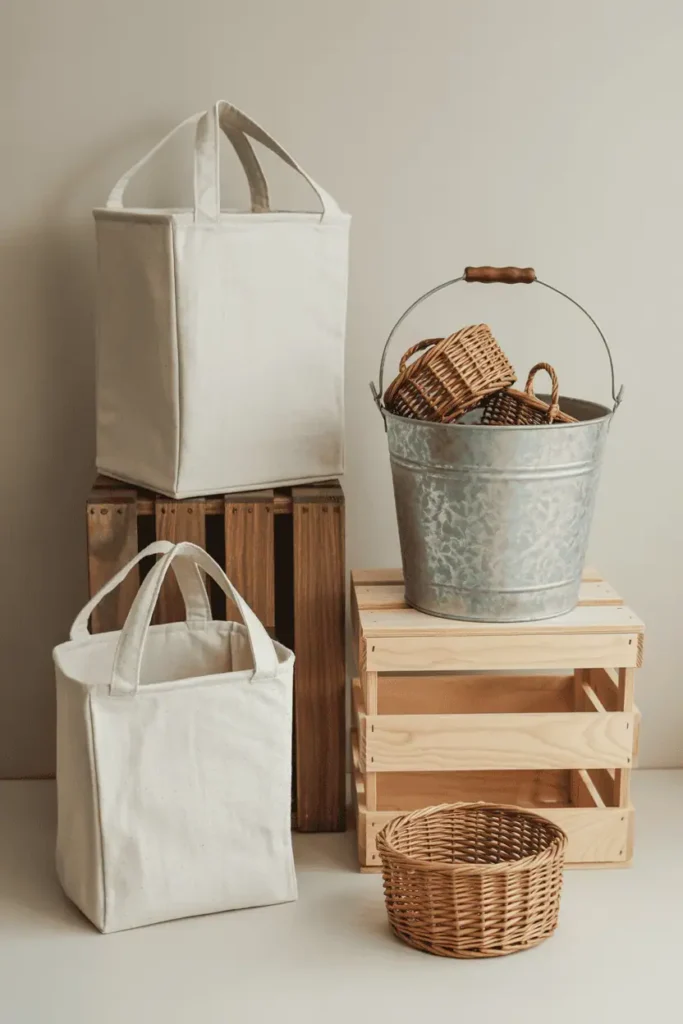
Making your own basket doesn't have to mean elaborate crafting. It can be as simple as choosing a reusable container—a small metal bucket, a fabric bin, a wooden crate—and filling it with items you've gathered intentionally over a few weeks.
DIY baskets often feel more personal because they're built around what you know your child loves. A nature-loving kid might get a basket with a magnifying glass, a small field guide, and a jar for collecting rocks. A child who loves to build might get Lego sets, small wooden blocks, or a new set of toy cars.
The container itself becomes part of the gift. A fabric storage bin can hold toys long after Easter. A metal bucket works for outdoor play or bedroom organization. Choosing a basket that has a second life makes the whole gift feel more sustainable.
Non-Candy Options That Still Feel Like Treats
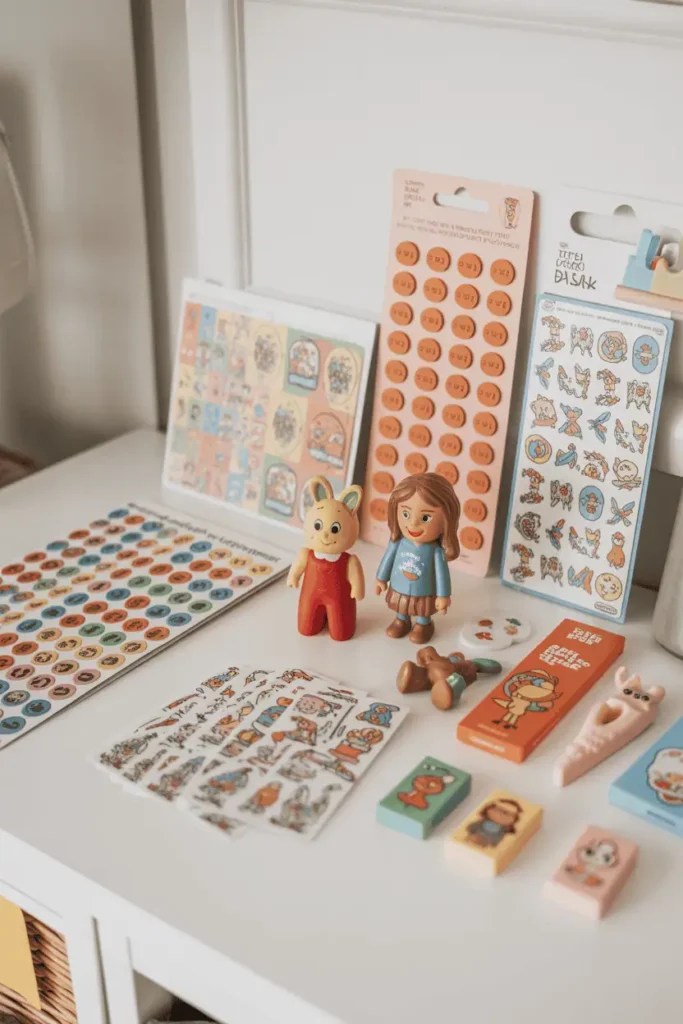
Replacing candy entirely isn't necessary, but reducing it or choosing alternatives can make baskets feel less sugar-heavy. Stickers, small figurines, temporary tattoos, or themed erasers all feel like treats to younger kids without the sugar crash.
For older kids, consider small gift cards, a new phone case, a favorite snack that isn't candy, or a small accessory they've mentioned wanting. These items feel more grown-up and show that you're paying attention to their current interests.
Non-candy baskets also work well for babies and toddlers who aren't eating sweets yet. Fill their baskets with teething toys, soft books, bath toys, or stacking cups—all items that fit the age and stage without relying on chocolate.
Age-Appropriate Ideas for Babies
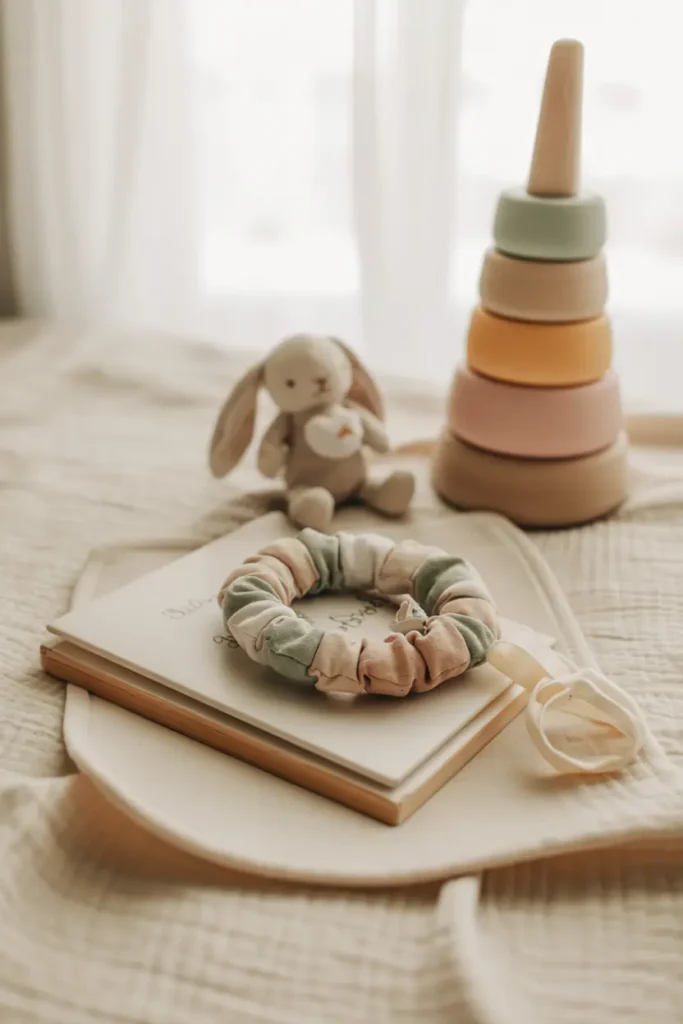
Easter baskets for babies should focus on sensory exploration and developmental play. Soft rattles, teething rings, fabric books, and small plush toys all work well. Avoid anything with small parts or choking hazards.
Babies don't understand the holiday yet, so the basket is really for the parents—a way to mark the occasion and take a few cute photos. Choose items that will get used in the coming months rather than things that only make sense for one morning.
A small basket with a soft bunny, a teething ring, and a board book is enough. Babies don't need abundance. They need a few safe, engaging items that fit into their daily routines.
Creative Baskets for Toddlers and Preschoolers
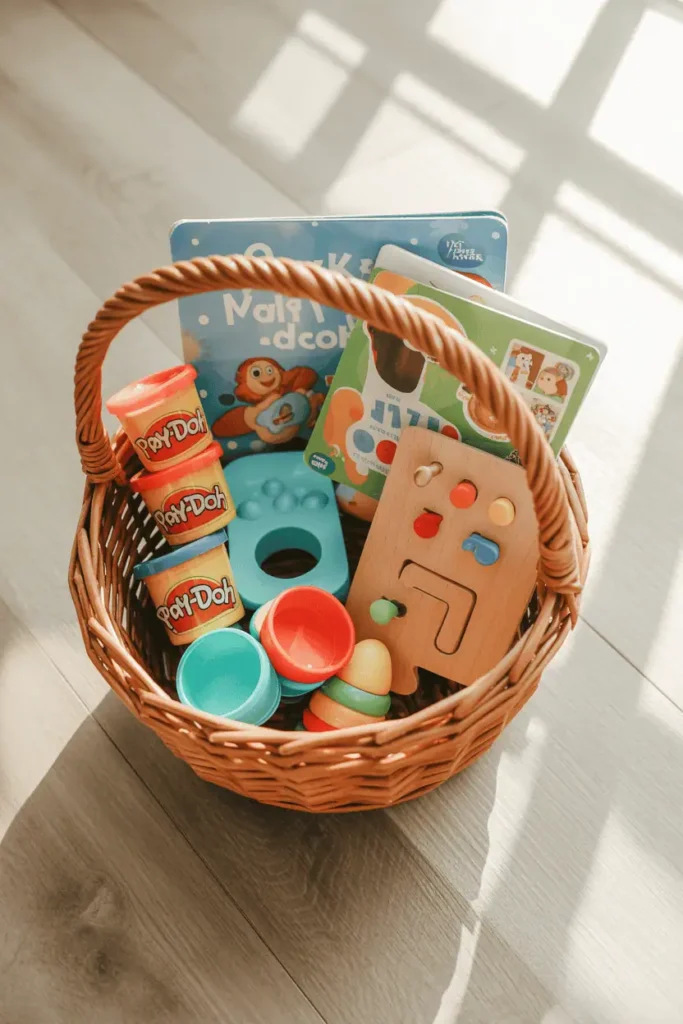
This age loves small surprises and tactile experiences. Play-Doh, bath toys, small puzzles, sticker books, and simple building toys all work beautifully. Toddlers also enjoy items they can sort, stack, or carry around.
Consider adding one or two larger items—a new stuffed animal, a toy truck, a doll—and filling the rest of the basket with smaller treasures. This age doesn't yet compare what they got to what siblings or friends received, so you have more freedom to personalize.
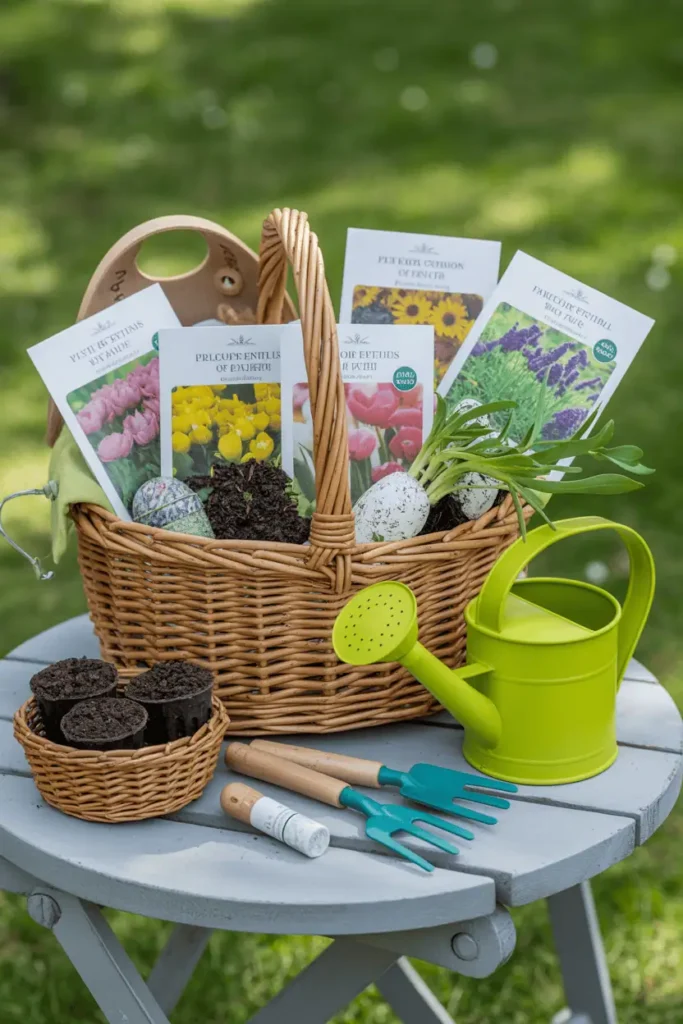
Toddlers also love anything they can "help" with. A small watering can for pretend gardening, a toy broom, or a set of plastic dishes for playing kitchen all feel like special gifts at this stage.
Baskets for Elementary-Aged Kids
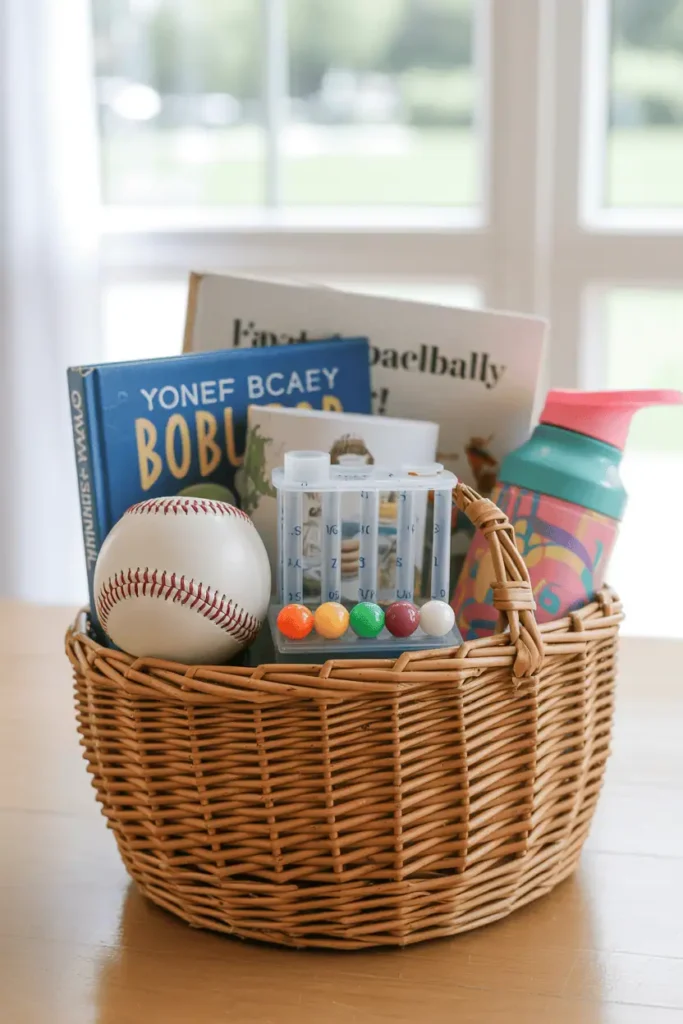
Kids in this age range appreciate baskets that reflect their hobbies and interests. A child who loves science might get a small experiment kit, a bug-catching jar, or a book about space. A child who loves sports might get a new baseball, a water bottle, or a headband in their team colors.
This is also a good age for small DIY kits—friendship bracelet materials, a paint-by-number set, or a simple sewing project. These activities keep kids engaged beyond Easter morning and give them something to show for their time.
Elementary-aged kids also start to notice what's fair between siblings, so try to keep baskets relatively balanced in size and value. The contents don't need to be identical, but the overall feel should be equitable.
Teen Baskets That Don't Feel Childish
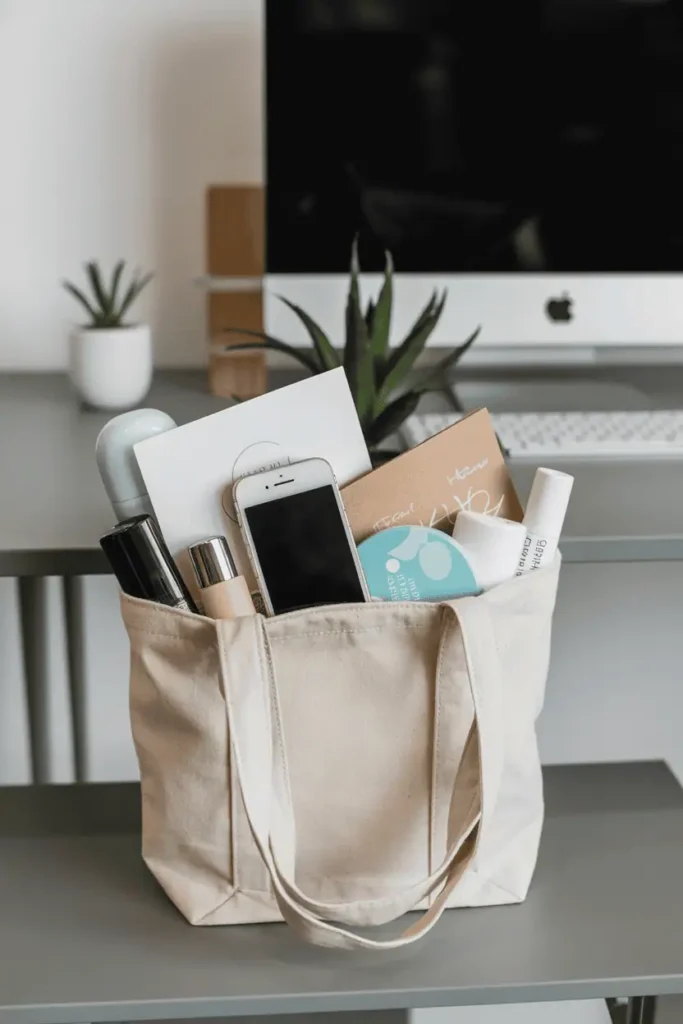
Teens still appreciate Easter baskets, but the approach needs to shift. Skip the plastic grass and pastel colors. Use a reusable tote bag, a small drawstring backpack, or even a sturdy gift bag instead.
Fill it with items they'll actually use: favorite snacks, a new phone charger, lip balm, nail polish, a gift card to their favorite store, or a small tech accessory. Teens also appreciate self-care items—face masks, bath bombs, or a nice candle.
The key is treating them like the almost-adults they're becoming while still acknowledging that they're part of the tradition. A well-thought-out basket for a teen shows you're paying attention to who they are now, not who they were five years ago.
Small Basket Ideas That Don't Overwhelm
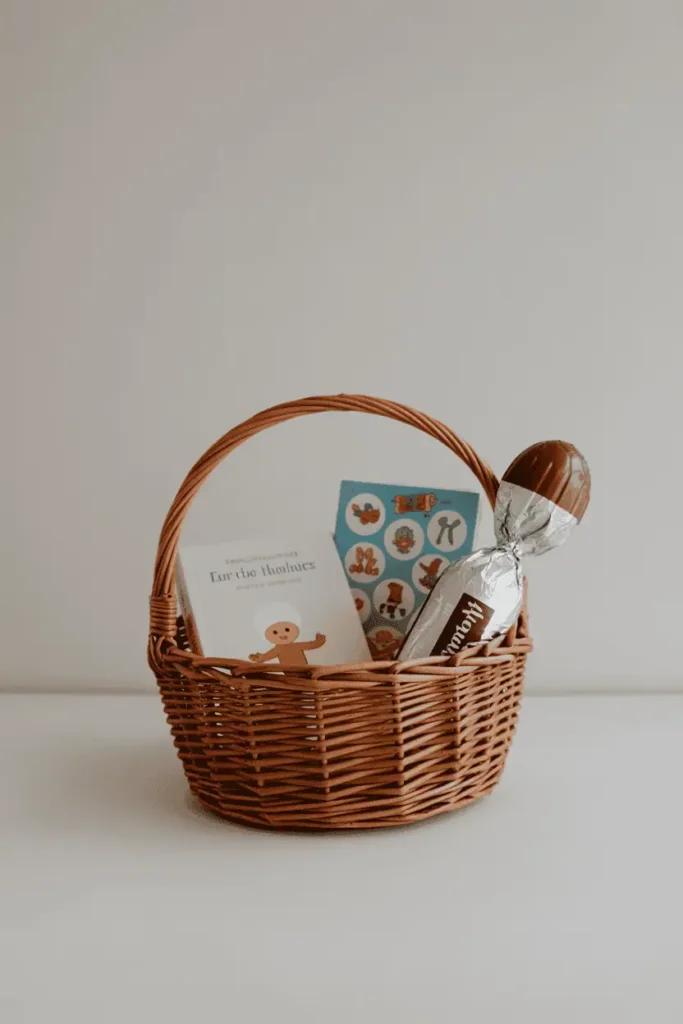
Not every basket needs to overflow. A smaller basket with three to five well-chosen items can feel just as special as a large one stuffed with filler. This approach works especially well for families trying to reduce clutter or manage budgets.
A small basket might include a book, a small toy, a pack of stickers, and one piece of quality chocolate. That's enough to make the morning feel festive without contributing to the pile of broken plastic that accumulates after most holidays.
Small baskets also work well for families with multiple kids. They're easier to assemble, easier to store, and easier to keep balanced across different ages.
DIY Basket Ideas on a Budget
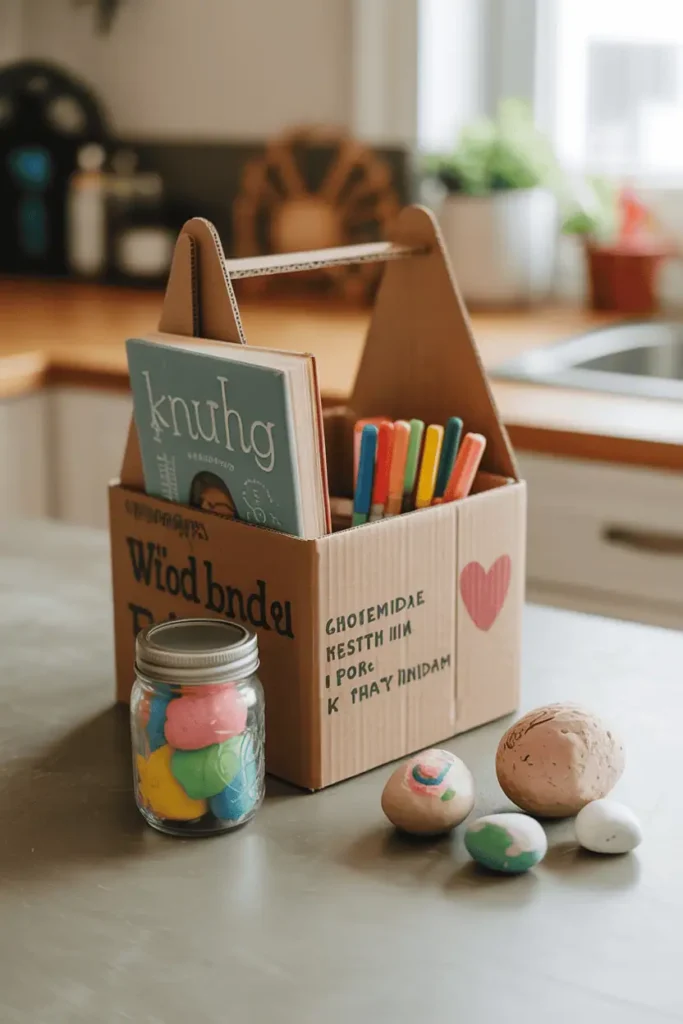
You don't need to spend a lot to create a memorable basket. Thrift stores, dollar stores, and your own stash of unused items can all contribute. A gently used book, a roll of stickers, a small toy you picked up on clearance months ago—all of these work.
Consider making some of the basket contents yourself. Homemade play dough, a batch of painted rocks, a simple felt bookmark, or a hand-drawn coloring page all add a personal touch without costing much.
The basket itself can be repurposed from what you already have—a mixing bowl, a plastic bin, a reusable shopping bag, or even a cardboard box decorated with markers. Kids care more about what's inside than the container it comes in.
Baskets for Boys That Break the Mold
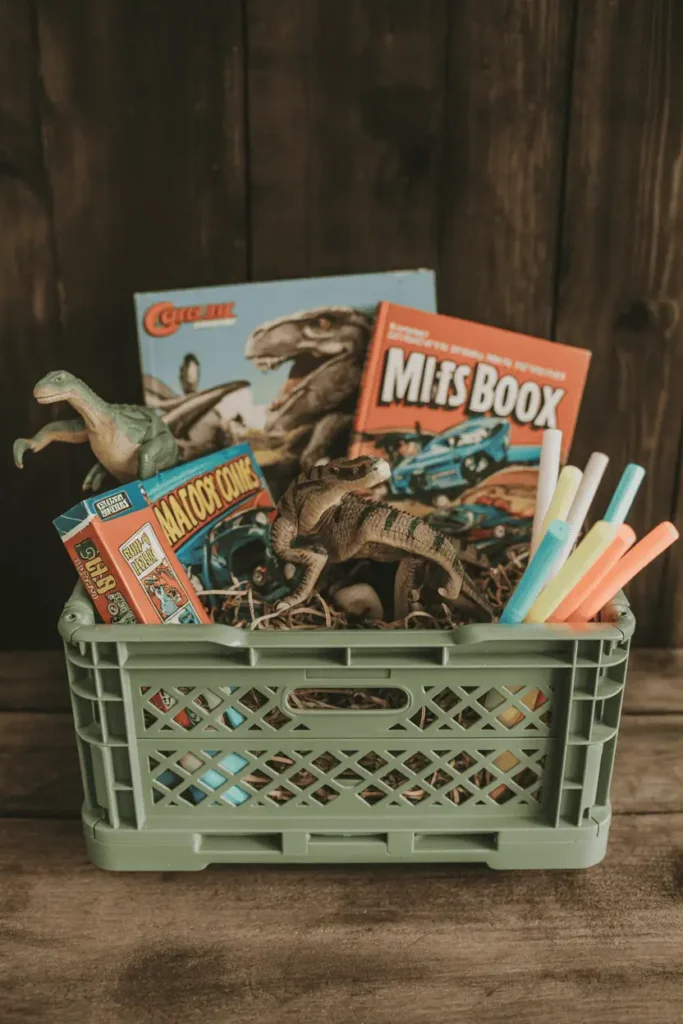
Easter baskets don't need to be pastel or bunny-themed to work. Boys often appreciate baskets built around their interests—dinosaurs, space, construction vehicles, sports, or whatever they're currently obsessed with.
Fill a basket with small matchbox cars, a new action figure, a comic book, glow sticks, or a small building set. Use a bucket or crate instead of a traditional wicker basket if that feels more fitting. The holiday is flexible enough to accommodate different aesthetics.
The goal is to make the basket feel relevant to your child, not to force it into a narrow vision of what Easter "should" look like. Boys can enjoy the tradition just as much when it's tailored to what they actually care about.
Timing and When to Start Planning
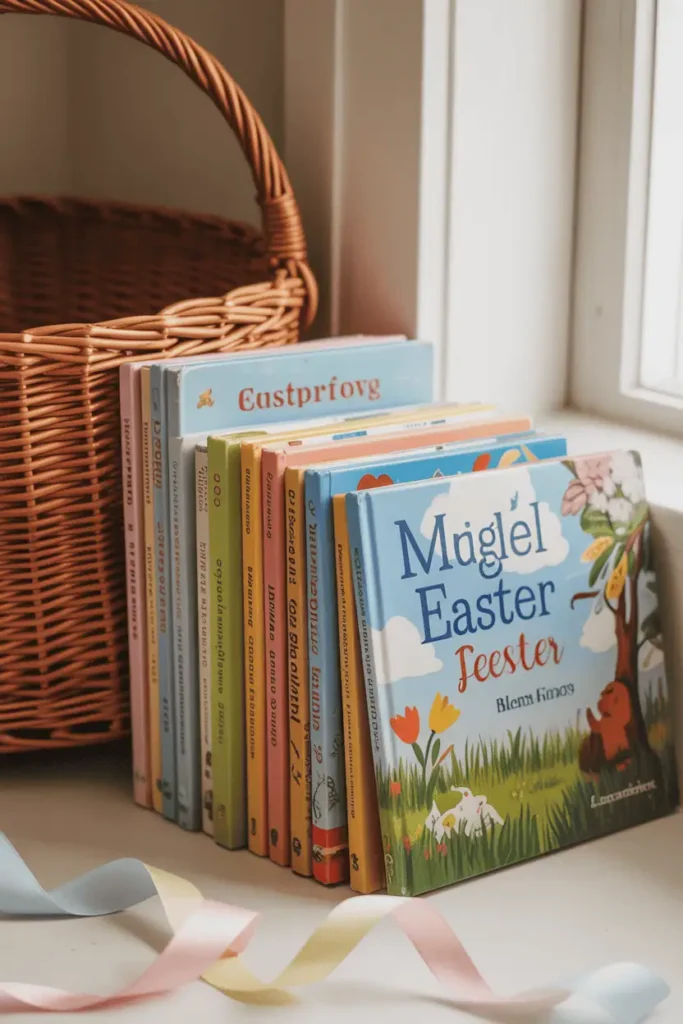
You don't need to start shopping months in advance, but giving yourself a few weeks helps you avoid last-minute stress and overspending. Start noticing what your child mentions wanting or needing, and keep a running list.
Most Easter basket items can be gathered gradually. Pick up a book during a regular shopping trip, grab art supplies when they're on sale, or order a small toy online when you have free shipping. This spreads out the cost and makes the process feel less overwhelming.
Plan to have baskets ready by the night before so you're not scrambling on Easter morning. Assemble them after kids are in bed, and place them somewhere they'll find them first thing. The anticipation is part of the magic.
What to Avoid and Common Mistakes
Avoid filling baskets with items that will cause immediate regret—loud toys, anything with glitter, or cheap plastic that breaks within hours. These items create mess and frustration rather than joy.
Also avoid over-gifting. A basket that's overflowing might look impressive, but it often leads to overwhelmed kids who don't appreciate individual items because there's too much to process. Less is often more, especially with younger children.
Don't forget to consider your own tolerance for cleanup. If you hate Legos scattered everywhere, don't put a Lego set in the basket. If you can't stand noise, skip the toy that plays music. You're the one living with these items long after the holiday ends.
Start with what you know your children love. Add a few small surprises. Keep it simple enough that you enjoy the process instead of dreading it. Save ideas that resonate, and come back to them when the time feels right.
For more seasonal inspiration and practical ideas for family celebrations, explore other guides that focus on real homes and real routines.