There's something about setting a table in early spring that feels different than any other time of year. The light is softer through the windows, the air feels lighter, and suddenly it makes sense to bring branches indoors or set out eggs that aren't perfectly dyed. Easter falls at that sweet moment when winter feels officially over, but summer hasn't arrived yet—and the table becomes a place to celebrate that shift.
A spring table doesn't need to look like a magazine spread to feel special. In fact, the tables that feel most inviting are usually the ones that look like someone actually lives there—a mix of what you already own, a few fresh additions, and enough breathing room that guests feel comfortable reaching for bread or pouring more water. The goal isn't perfection. It's creating a table that makes people want to sit down and stay awhile, where the setting feels intentional but not fussy, and where the food and conversation matter more than whether every napkin is folded identically.
This is about building a table that works for your home, your style, and your actual Easter plans—whether that's brunch for six or dinner for twelve.
Start with a Base Layer That Anchors Everything
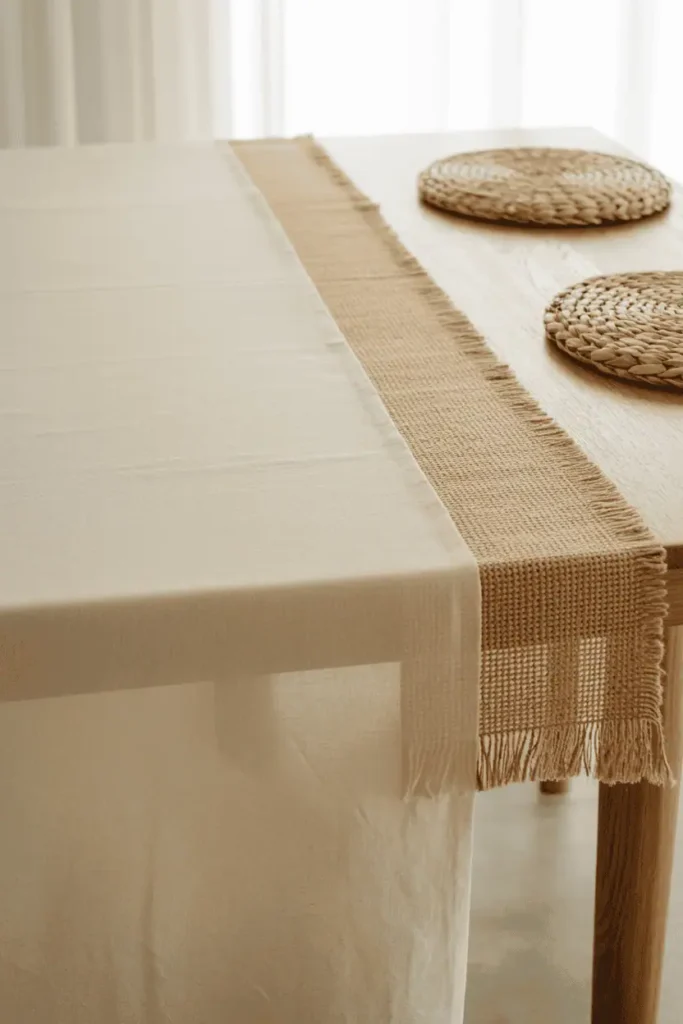
The foundation of any table setting is what goes down first, and for spring, that usually means choosing between a tablecloth, a runner, or leaving the table bare. Each option creates a different mood, and none of them is wrong.
A linen tablecloth in cream, soft white, or pale gray instantly makes the table feel more formal without looking stuffy. Linen wrinkles naturally, which actually works in your favor—it looks relaxed and lived-in rather than overly styled. If you're hosting a longer meal or want the table to feel cohesive, a full cloth gives you that clean slate.
A table runner offers structure without covering the entire surface, which works well if your table itself is beautiful or if you want to layer textures. Runners also make it easier to add individual placemats or chargers without feeling like you're covering up too much. For Easter, a runner in natural jute, soft linen, or even a vintage textile adds warmth without competing with everything else.
Bare tables work when the wood or surface has character on its own. In that case, individual placemats—woven, quilted, or simple linen—define each place setting without hiding what's underneath.
Quick styling tip: If you're using a runner, keep it simple and let it ground the center of the table. Everything else can layer around it without feeling cluttered.
Build Around a Centerpiece That Feels Grounded
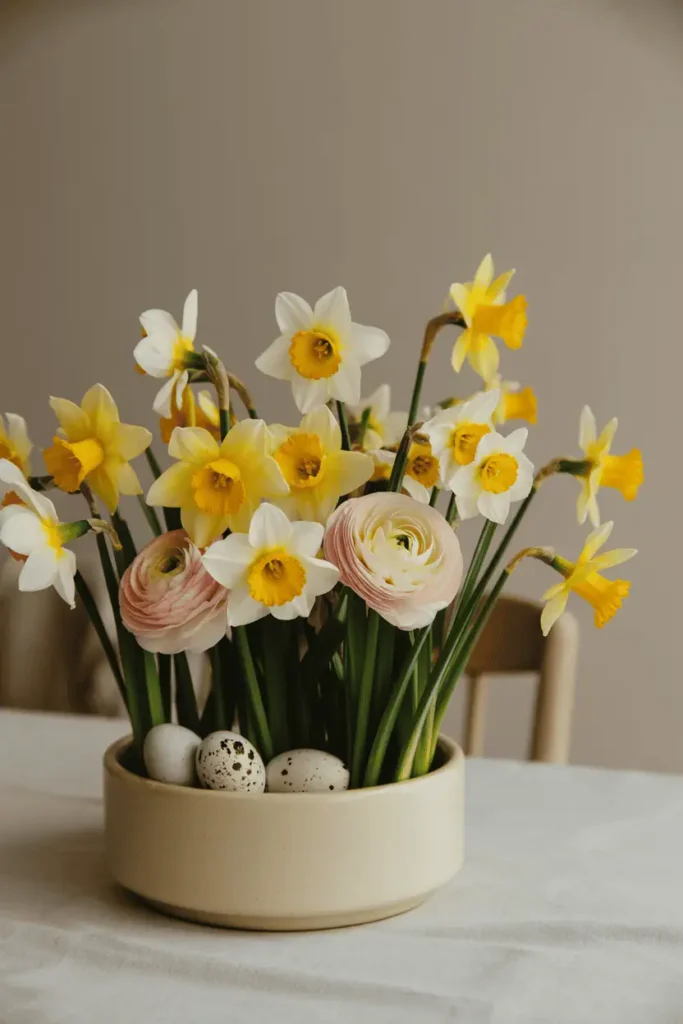
The centerpiece doesn't have to be elaborate, but it should feel intentional. For Easter, the most natural approach is to bring in something that reflects the season—branches, bulbs, eggs, or flowers that look like they could have been gathered from a garden.
A low, loose arrangement of tulips, daffodils, or ranunculus in a simple ceramic or glass vessel keeps sightlines clear and doesn't make conversation awkward. The key is keeping it under twelve inches tall so no one has to lean around it. Tulips are especially forgiving because they continue to move and open throughout the meal, which makes the table feel alive.
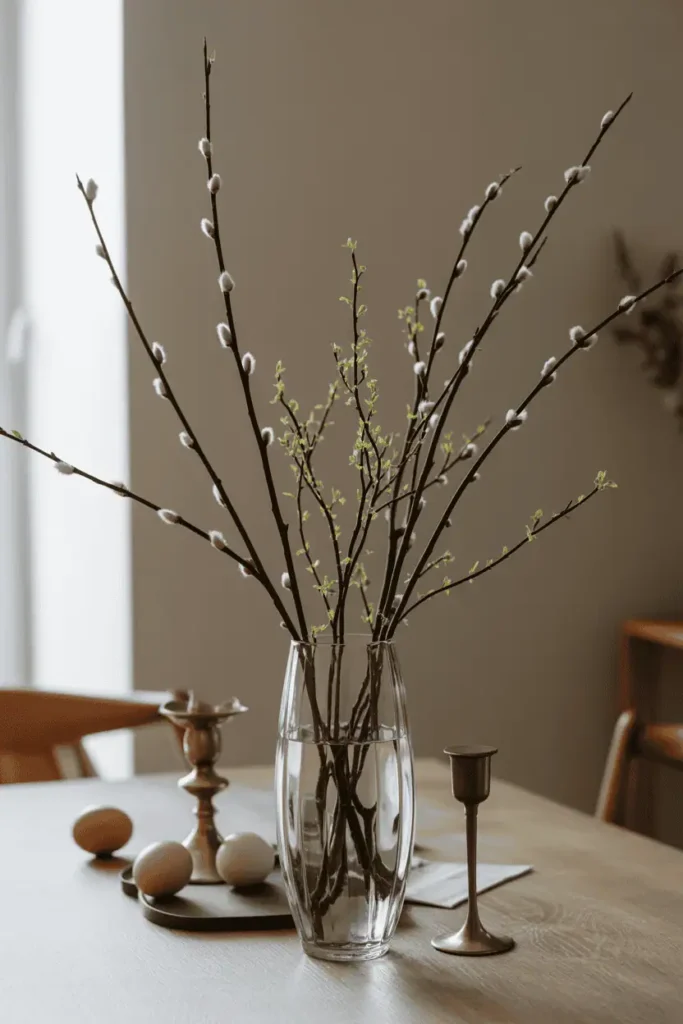
Branches—pussy willow, flowering quince, or dogwood—work beautifully in taller vessels if placed at the center or slightly off to one side. They add height without blocking views, and they bring in texture that flowers alone can't provide. You can often cut branches from your own yard or pick them up inexpensively at a grocery store or farmers market.
- Nest a few natural or ceramic eggs at the base of a floral arrangement
- Use a wooden dough bowl or shallow tray to corral smaller elements like votives and greenery
- Place bud vases with single stems down the length of the table instead of one large centerpiece
Layer in Plates That Feel Thoughtful, Not Matched
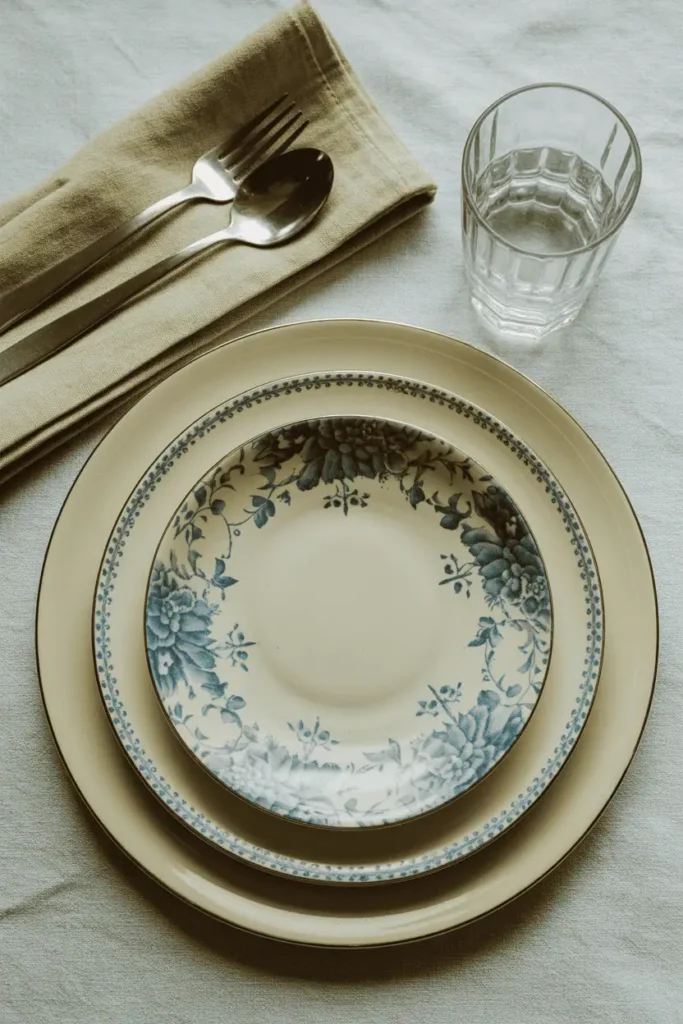
You don't need to own a full set of Easter-specific dishes to create a table that feels intentional. In fact, mixing what you already have often looks more interesting than everything matching perfectly.
Start with your everyday dinner plates as the base, then add a salad plate or small vintage plate on top in a complementary color or pattern. White plates are the easiest to work with because they let everything else stand out, but cream, soft gray, or even pale blue can anchor the setting without feeling too themed.
If you want to bring in color, do it through the smaller top plate rather than trying to replace your entire set. Thrifted or vintage plates in soft florals, delicate borders, or simple patterns add personality without looking like you tried too hard. Mismatched plates feel collected and personal, especially when they share a similar color story.
Chargers—those larger plates that sit underneath everything—add a layer of polish, but they're not essential. If you use them, choose natural materials like woven seagrass, rattan, or simple ceramic in neutral tones. They should enhance the setting, not dominate it.
Choose Linens That Add Softness Without Fuss
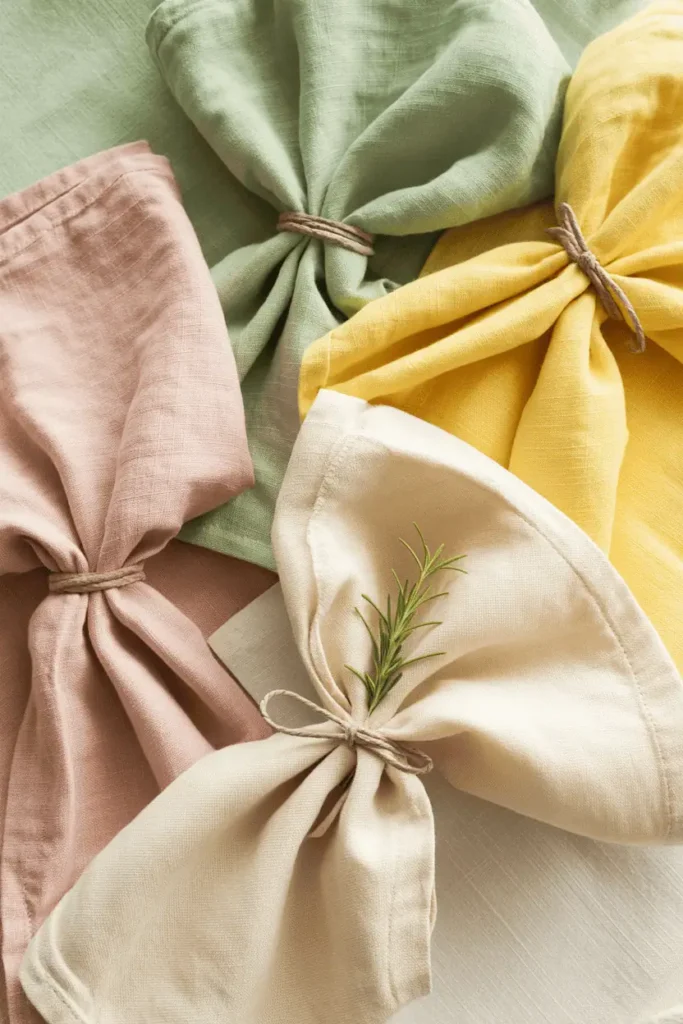
Napkins are one of the easiest ways to bring color, texture, or pattern into your table without committing to anything permanent. For spring, linen napkins in soft pastels, natural tones, or classic white feel appropriate without being overly Easter-themed.
If your dishes are mostly neutral, napkins are where you can introduce soft blush, sage green, pale yellow, or sky blue. If your plates already have pattern or color, keep napkins simple so the table doesn't feel too busy. The goal is balance—not every element needs to make a statement.
Napkin rings or ties are optional, but they do add a small finishing touch. Simple brass rings, twine with a sprig of rosemary or lavender, or even a piece of ribbon in a coordinating color keep things polished without feeling stiff. Folded napkins placed on the plate or to the left of the setting work just as well if you prefer a more relaxed look.
Keep in mind: Cloth napkins don't have to be ironed to perfection. A slightly rumpled linen napkin actually looks more inviting than something overly crisp.
Add Small Touches at Each Place Setting
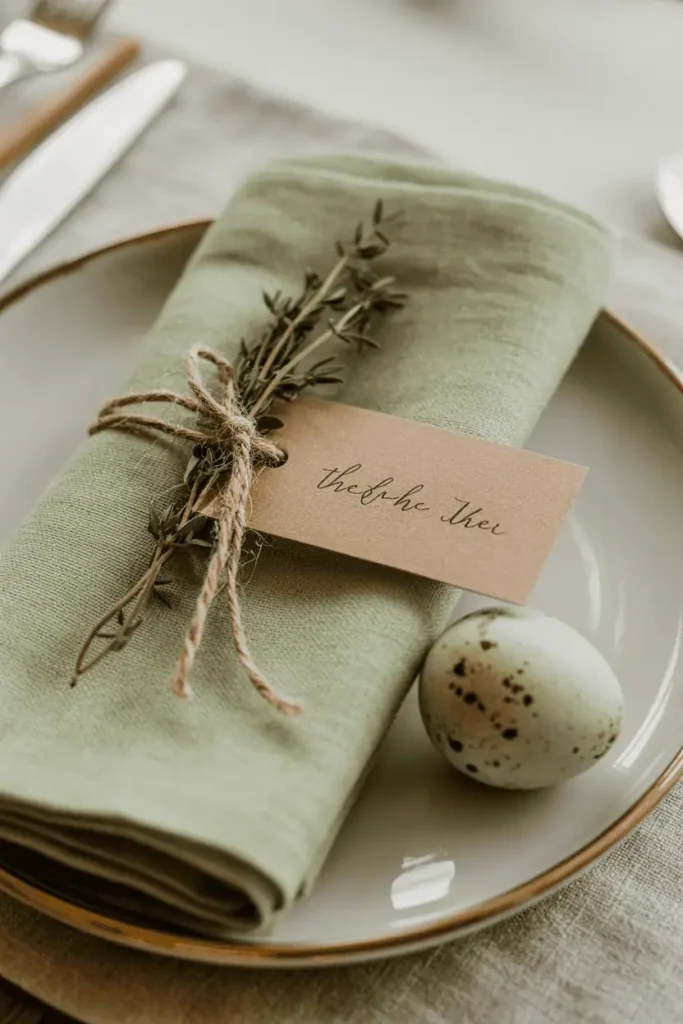
Individual details make each seat feel considered, and they don't have to be complicated. A small sprig of greenery, a single flower tucked into a napkin ring, or a tiny egg at each place setting adds charm without taking up space.
Place cards—handwritten on small kraft paper tags, vintage postcards, or even smooth stones—help guests find their seats and add a personal touch. They also make the table feel more formal in the best way, signaling that thought went into the gathering.
If you're serving brunch, consider adding a small favor at each seat—a mini jar of honey, a packet of flower seeds, or a small wrapped chocolate. These don't need to be expensive or elaborate. They're just a small gesture that makes guests feel welcomed before the meal even starts.
- Tie a sprig of fresh herbs like thyme or rosemary onto each napkin
- Place a single stem in a tiny bud vase at each setting
- Use vintage teacups as unexpected holders for small arrangements or eggs
Use Glassware That Feels Light and Uncluttered
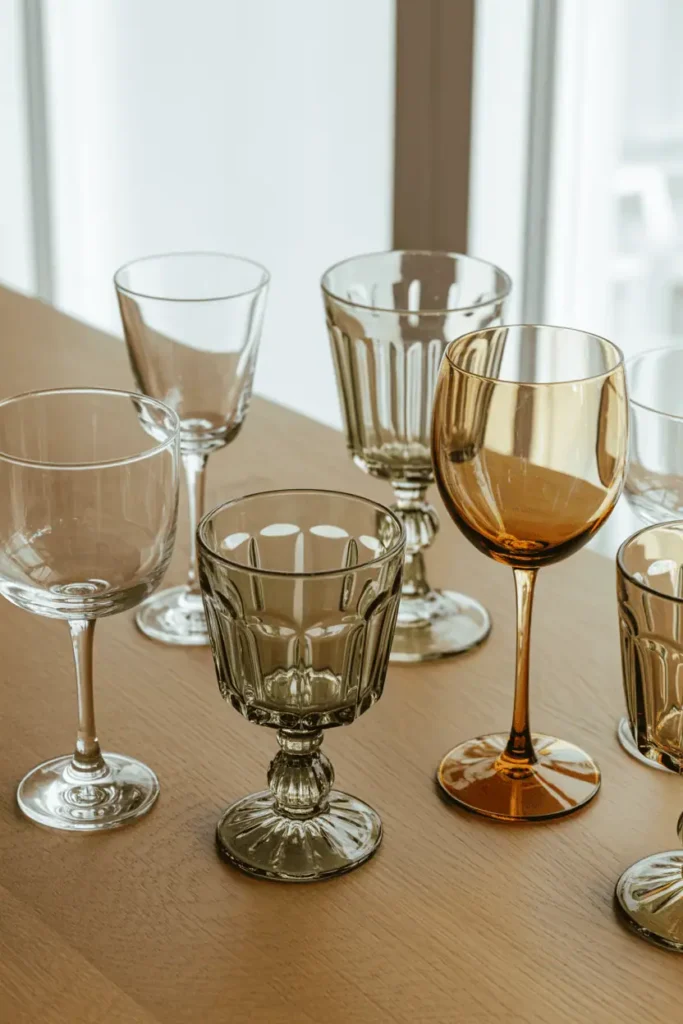
Spring tables benefit from glassware that feels airy and simple. Clear glass is always safe, but pale green, soft pink, or amber-toned glasses add subtle warmth without feeling too colorful.
Water glasses and wine glasses don't need to match exactly, but they should feel like they belong together. Mixing vintage glassware with modern pieces works well as long as the scale is similar—tall, slender glasses pair better with each other than a mix of short tumblers and oversized goblets.
If you're serving both water and wine, keep it simple with one glass for each rather than trying to set a full stemware collection at every seat. This keeps the table from feeling crowded and makes it easier for guests to navigate their place setting.
Colored glassware in soft pastels can replace or supplement traditional clear glass, especially if your dishes are neutral. Blush pink, pale green, or smoky amber glasses catch the light beautifully and add just enough color without overwhelming the table.
Bring in Candles for Warmth, Even in Daylight
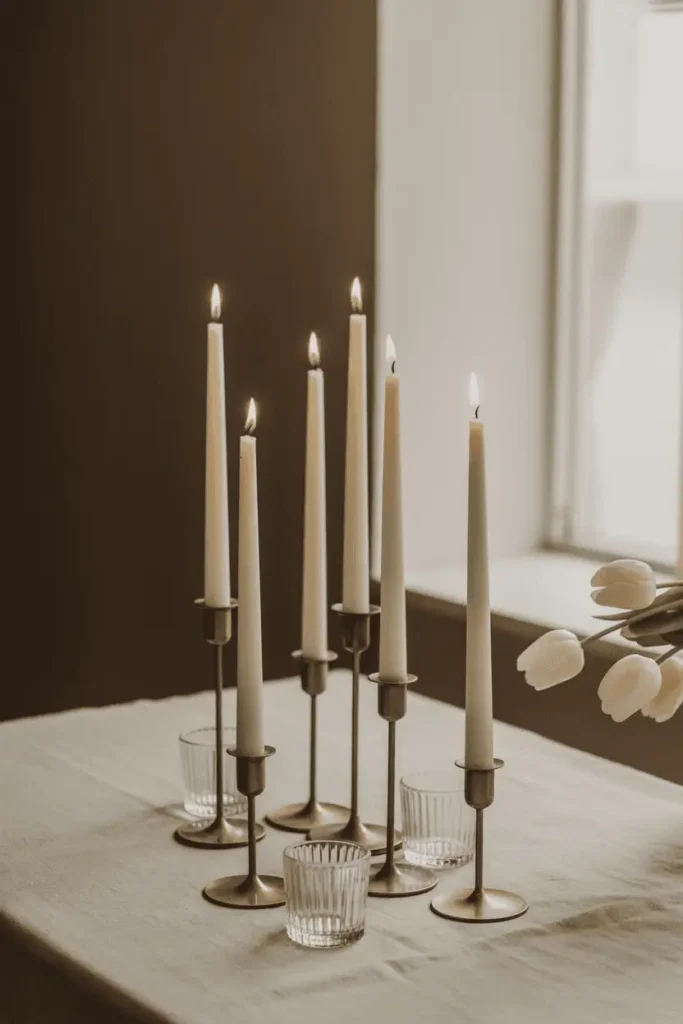
Candles might seem unnecessary for a daytime brunch, but they add a soft glow that makes the table feel more intimate, even with natural light streaming in. Tapers, votives, or pillars all work depending on the mood you're creating.
Taper candles in soft colors—cream, blush, sage, or natural beeswax—add height and elegance without taking up much surface space. Use simple brass, ceramic, or glass candlesticks rather than anything too ornate. Groupings of three or five down the center of the table create rhythm and visual interest.
Votive candles scattered along the table or clustered near the centerpiece add warmth without blocking views. Use unscented candles so they don't compete with the smell of food, and place them in clear glass holders or small ceramic vessels.
If you're hosting dinner rather than brunch, candlelight becomes even more important. The table will feel more polished and intimate with candles lit, and the flickering light softens everything—including imperfections in the setting.
Consider How Food Will Be Served
The way food arrives at the table affects how the setting works, and it's worth thinking through before guests arrive. Family-style serving dishes placed directly on the table need space, which means your centerpiece and other elements need to be flexible.
If you're serving family-style, keep the center of the table more open so platters and bowls have room. A runner helps define where food goes versus where decor sits, and trivets or small cutting boards protect the table from hot dishes.
Plated meals allow for more elaborate centerpieces because the table doesn't need to accommodate serving dishes. In that case, you can build your decor more fully down the center without worrying about leaving room for passing food.
Buffet-style serving takes pressure off the table entirely, which means you can style it more freely. In this case, the table becomes purely about the place settings and ambiance, and guests serve themselves elsewhere before sitting down.
Mix Heights and Textures to Avoid Flatness
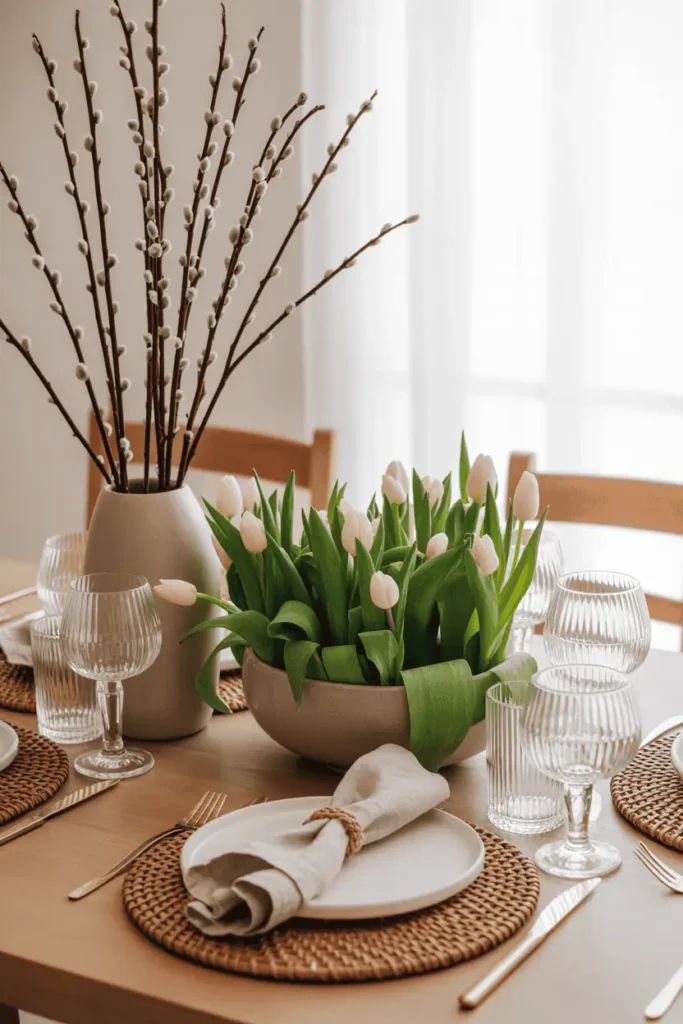
A table that's all one height feels static, so varying the levels of your elements makes everything more visually interesting. This doesn't mean you need risers or complicated layering—it's more about naturally incorporating objects of different heights.
Taper candles provide vertical interest, while low floral arrangements and scattered eggs keep things grounded. A taller vessel with branches on one end of the table can balance a lower, wider arrangement on the other. The goal is to create movement across the table so your eye travels naturally from one end to the other.
Texture is just as important as height. Smooth ceramic plates, nubby linen napkins, woven placemats, delicate glassware, and natural wood or rattan elements all provide different tactile qualities that make the table more engaging. Too much of any one texture—all smooth, all woven, all matte—can make a table feel one-dimensional.
- Combine matte ceramics with glossy glassware
- Pair smooth linen with textured woven elements
- Mix polished metal candlesticks with natural wood or stone accents
Choose Colors That Feel Like Early Spring

Easter tables don't have to be pastel, but they should feel light. The palette you choose sets the entire mood, and spring naturally leans toward softer, fresher tones rather than anything too saturated or heavy.
Classic pastels—blush pink, soft mint, pale yellow, sky blue—work beautifully and feel unmistakably spring. But you can also build a table around cream, white, and natural wood tones with just hints of green from fresh herbs or eucalyptus. This approach feels modern and understated while still being seasonal.
If you prefer more color, consider deeper spring tones like sage green, dusty lavender, or soft terracotta. These feel grounded and sophisticated without reading as too summery or overly Easter-themed. The key is keeping the tones muted rather than bright.
Avoid using too many colors at once. A table with three main colors—plus white or cream as a neutral—feels cohesive. More than that, and it starts to look scattered.
Think About Seating and Comfort
The most beautiful table setting won't work if guests aren't comfortable, and Easter meals often stretch longer than everyday dinners. If your chairs are hard, consider adding cushions or throws to make them more inviting.
Make sure there's enough room between place settings so guests don't feel cramped. About two feet per person is ideal, though you can go slightly narrower if needed. If you're tight on space, a smaller centerpiece or no centerpiece at all makes the table feel less crowded.
Seating arrangements matter more than most people realize. Mixing conversational pairings, balancing talkative and quieter guests, and avoiding putting all the kids or all the adults in one cluster helps the meal flow more naturally.
If you're using a mix of seating—dining chairs plus a bench, for example—balance it so one side doesn't feel less comfortable than the other. Benches work well for kids or casual settings, but adults usually prefer individual chairs for longer meals.
Add Fresh Elements That Can Be Prepped Early
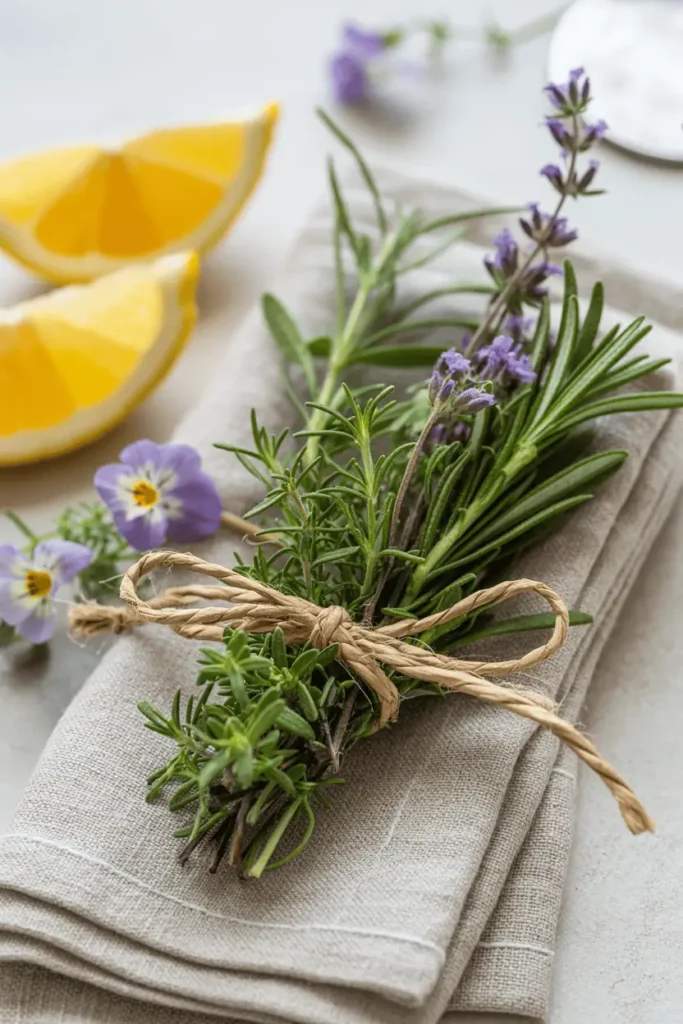
Spring ingredients—fresh herbs, edible flowers, citrus slices—can double as decor, and they're easy to incorporate into the table without extra effort. A small bundle of fresh herbs tied with twine at each place setting smells wonderful and can be used in cooking later.
Citrus slices—lemon, lime, or orange—can be scattered near the centerpiece or floated in water glasses for a subtle, fresh detail. Edible flowers like pansies or violas can be tucked into napkin folds or placed on top of salads for a delicate, unexpected touch.
These elements work best when they're added close to when guests arrive, so they stay fresh and vibrant. Herbs can be prepped the night before and kept in damp paper towels in the fridge, then brought out right before the meal.
Plan for Practical Details That Keep Things Flowing
Salt and pepper, water pitchers, butter dishes, and bread baskets all need a place on the table, and they're easy to forget until the meal is already underway. Planning where these go ahead of time keeps you from scrambling once guests sit down.
Small dishes for olive pits, lemon seeds, or shells should be easy to reach and unobtrusive. Tiny ceramic bowls or small vintage dishes work well and can be placed near each end of the table.
If you're serving wine, have corkscrews or openers nearby so you're not searching mid-meal. Water pitchers should be filled and placed within reach so guests can refill their own glasses without waiting.
Quick styling tip: Group practical items like salt, pepper, and olive oil on a small tray so they're easy to access but don't clutter the table. This keeps them functional without making the table look utilitarian.
Incorporate Natural Elements That Ground the Table
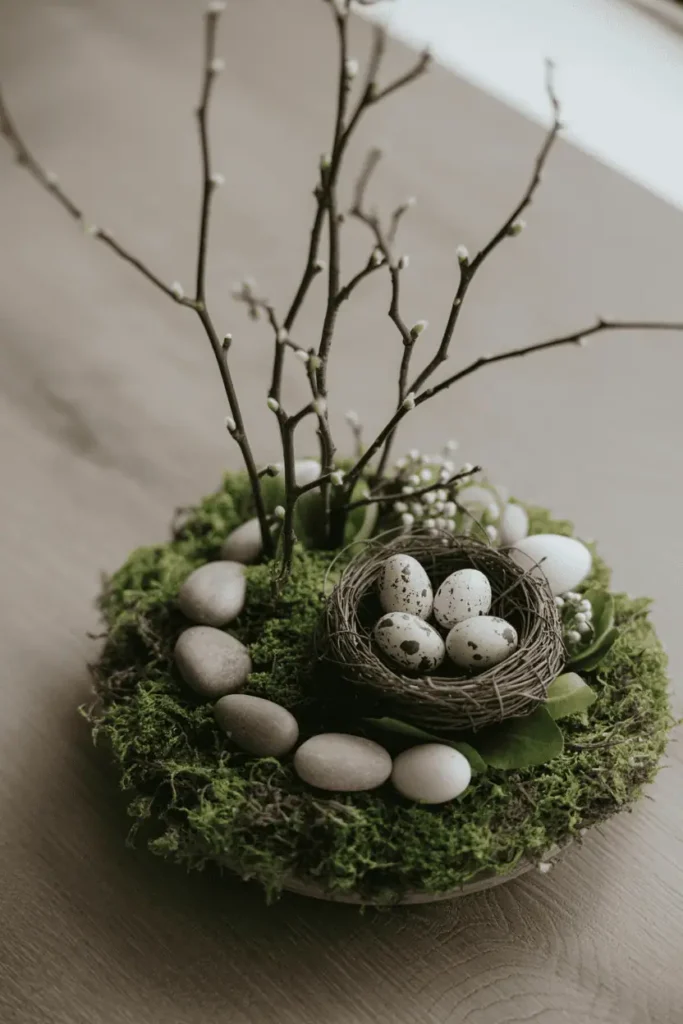
Spring is the easiest season to bring the outdoors in, and natural elements—branches, moss, stones, nests—make a table feel grounded and organic. These don't need to be purchased. Often, a walk around your yard or neighborhood will give you everything you need.
Pussy willow branches, budding tree branches, or even bare twigs arranged in a simple vase bring in the feeling of early spring without needing flowers. If you do add flowers, keeping them in the same color family as the branches creates cohesion.
Moss can be used as a base layer under candles, eggs, or small vessels. It adds softness and a bit of texture, and it's easy to find at craft stores or even outside if you're in a damp climate. Just make sure it's not too wet if you're placing it directly on the table.
Small nests—real or decorative—filled with eggs or left empty make sweet focal points, especially when clustered with candles or greenery. They feel symbolic without being overly literal, and they work for both Easter and general spring styling.
- Arrange lichen-covered branches in a low, wide vessel
- Scatter smooth river stones along the center of the table
- Tuck small clumps of moss around the base of candlesticks
Keep the Table Proportional to the Room
A table that feels right in one room might overwhelm another, and scale matters more than most people realize. If your dining room is small, a heavily layered table with a large centerpiece can make the entire space feel cramped. In that case, go minimal—a simple runner, low flowers, and clean place settings will feel more balanced.
In larger rooms, a sparse table can look unfinished. Adding more height through taller candles or branches, using a fuller centerpiece, and incorporating more layers at each place setting helps the table hold its own in the space.
The size of your centerpiece should also be proportional to the length of your table. A six-foot table doesn't need the same arrangement as a ten-foot one. Scale your decor to fit the surface without crowding it.
Style for the Meal You're Actually Serving
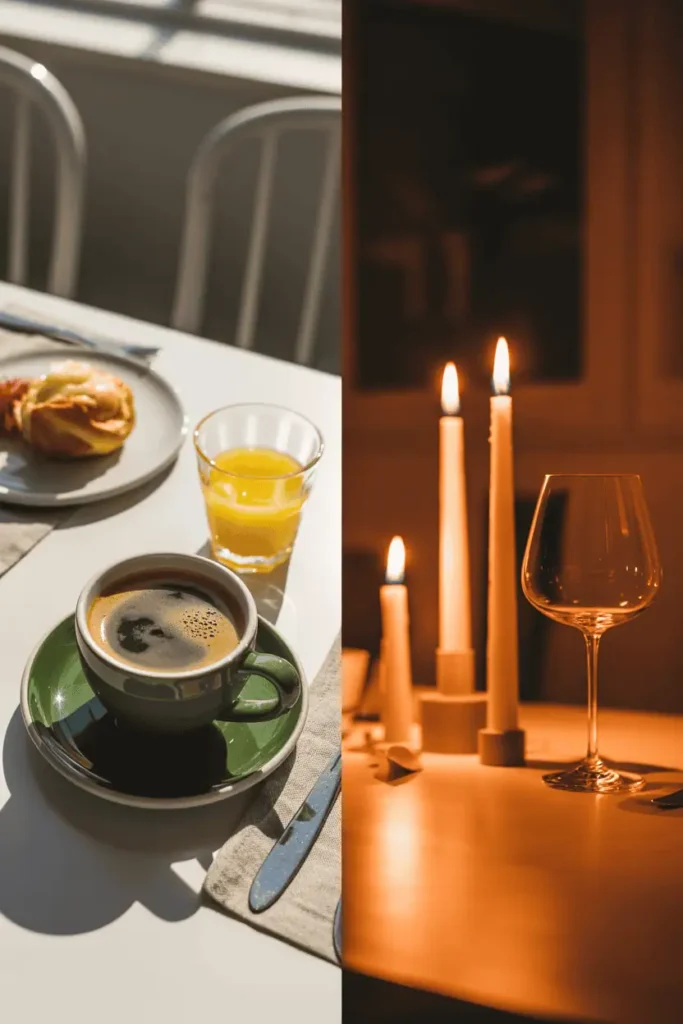
A brunch table looks different than a dinner table, and it's worth adjusting your styling to match the occasion. Brunch tends to feel lighter and more casual, with softer colors and simpler place settings. Dinner can handle more formality, richer colors, and fuller decor.
If you're serving brunch, consider adding small touches like individual juice glasses, coffee cups already at the table, or small pastries at each place setting. The table should feel ready for a leisurely, unhurried meal.
For dinner, the lighting shifts everything. Candles become essential, and the table can handle deeper tones or more dramatic elements. Even the same base setting will feel completely different once the sun sets and candles are lit.
Understanding the rhythm of the meal helps you plan the table accordingly. A long, multi-course dinner needs more space for additional utensils and glasses, while a simpler brunch can keep things more streamlined.
Don't Overthink the Details
The tables that feel the best are usually the ones that weren't fussed over endlessly. At some point, you have to step back and trust that what you've set up is enough. Guests won't notice if the napkins aren't folded identically or if one flower is slightly shorter than the others.
What they will notice is whether the table feels welcoming, whether there's space to set down a glass without knocking something over, and whether the setting invites them to sit and stay. That's the goal—not perfection, but a table that feels like it was made for gathering.
Setting a table for Easter doesn't require special skills or a large budget. It's about working with what you have, adding a few thoughtful touches, and creating a space that makes people want to sit down together. The tables that feel the most memorable are rarely the most elaborate—they're the ones where everything felt intentional but not precious, where the food and conversation mattered more than the styling.
If you're still planning your spring refresh, there are plenty of other ways to bring seasonal touches into your home, from entryway updates to simple bedroom swaps that make everything feel lighter.