The first few weeks of March carry a particular kind of restlessness. The house still feels like winter—heavy curtains, dark corners, air that's been recycled too many times. But the light outside is changing. It's sharper now, reaching further into rooms, and suddenly you're noticing how much your home needs to shift with it.
Flowers are one of the fastest ways to mark that transition. Not elaborate arrangements that require a florist or a special occasion, but simple stems in the right vessel, placed where you'll actually see them. Floral decor ideas for early spring work best when they feel unforced—a few tulips on the kitchen counter, branches with barely-opened buds on the dining table, or a single bloom in a small vase by the bathroom sink.
Early spring flowers are different from summer abundance. They're quieter, more restrained, and they don't last as long. But that's part of their appeal. They mark time in a way that feels intentional. A bunch of daffodils signals that winter is officially over, even if the mornings are still cold.
The goal isn't to fill every surface with florals. It's to bring in just enough to make your home feel awake again.
Starting with Stems You Can Find Locally
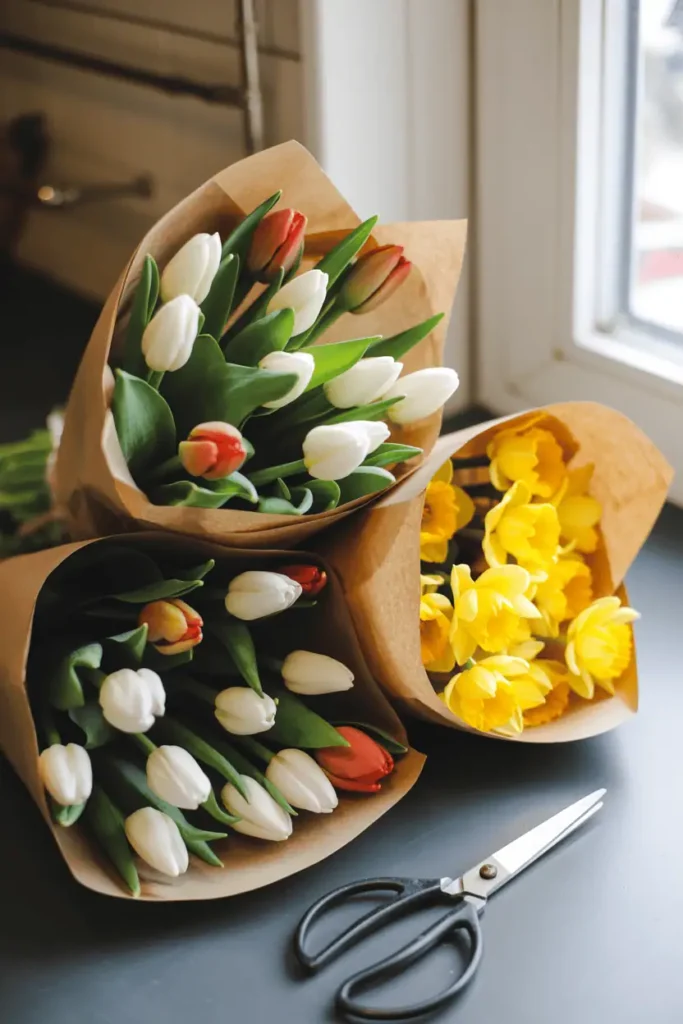
Grocery store flowers get overlooked, but they're often the most practical option for early spring. Tulips, daffodils, and hyacinths show up in bundles that cost less than a latte and last nearly a week with fresh water.
The key is choosing stems that still have a bit of tightness to them. Flowers that are already fully open will fade faster. Look for buds that are just starting to show color—they'll open gradually over the next few days and give you more time to enjoy them.
Local flowers also tend to be hardier than imported ones. They've traveled less, which means they're fresher when they reach your home. If you have access to a farmers market, early spring is when the first local stems start appearing—usually ranunculus, anemones, and early tulip varieties.
Single-Stem Arrangements That Don't Need Fussing
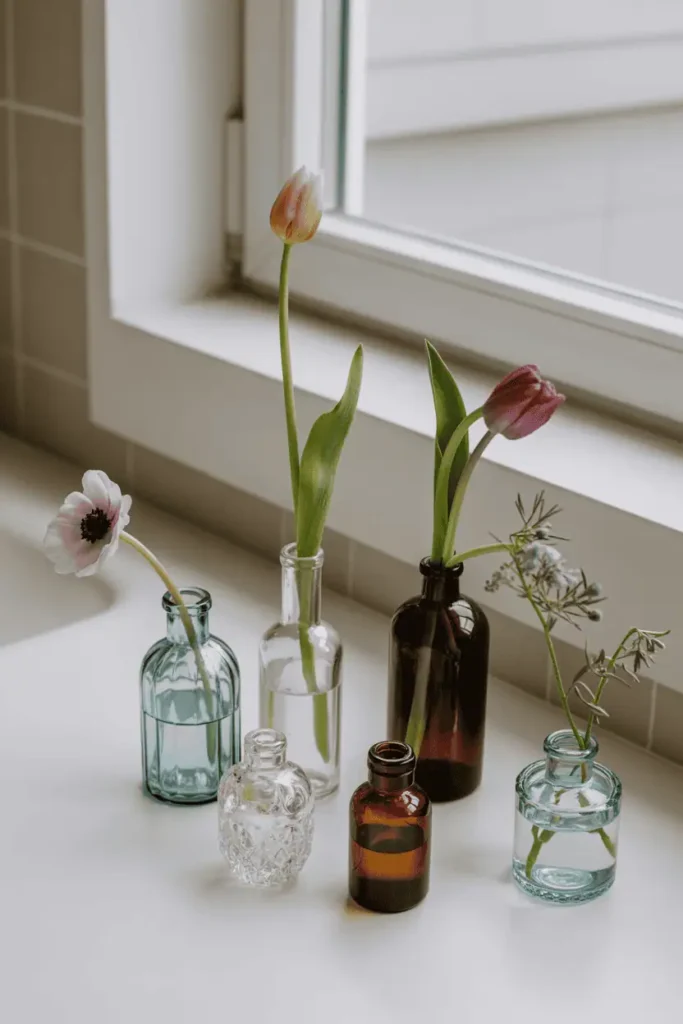
Not every flower needs to be part of a bouquet. A single stem in a bud vase or small bottle works just as well, especially in spaces where a full arrangement would feel too big.
Place single stems where you pause during the day—next to the coffee maker, on a bathroom counter, by the kitchen sink, or on a nightstand. These small moments of beauty add up. They don't demand attention, but they shift the mood of a room in a way that's hard to quantify.
Bud vases are forgiving. Any small glass bottle, vintage medicine jar, or even a clean spice jar works. The vessel doesn't need to match anything. In fact, mismatched containers often look better than a set because they feel collected rather than purchased all at once.
Using Branches Before Blooms Arrive
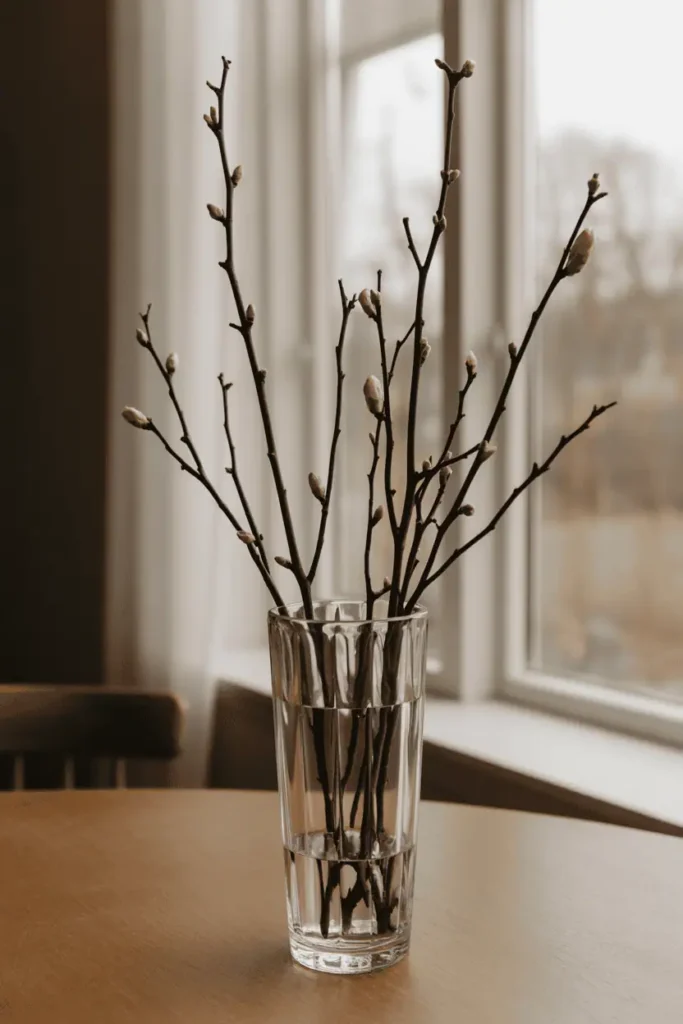
Flowering branches are one of the best-kept secrets of early spring decor. Forsythia, quince, cherry, and pussy willow all bloom indoors if you cut them at the right time and place them in water.
The process is simple. Cut branches when buds are just starting to swell, trim the ends at an angle, and place them in a tall vase with fresh water. Over the next week or two, the buds will slowly open, giving you a changing display that evolves daily.
Branches work especially well in larger spaces where small flower arrangements would disappear. A tall vase of budding quince on a dining table or in a corner brings height and movement without the cost of multiple bouquets. The bare structure of the branches also adds visual interest even before blooms appear.
Modern Flower Arrangements That Feel Calm
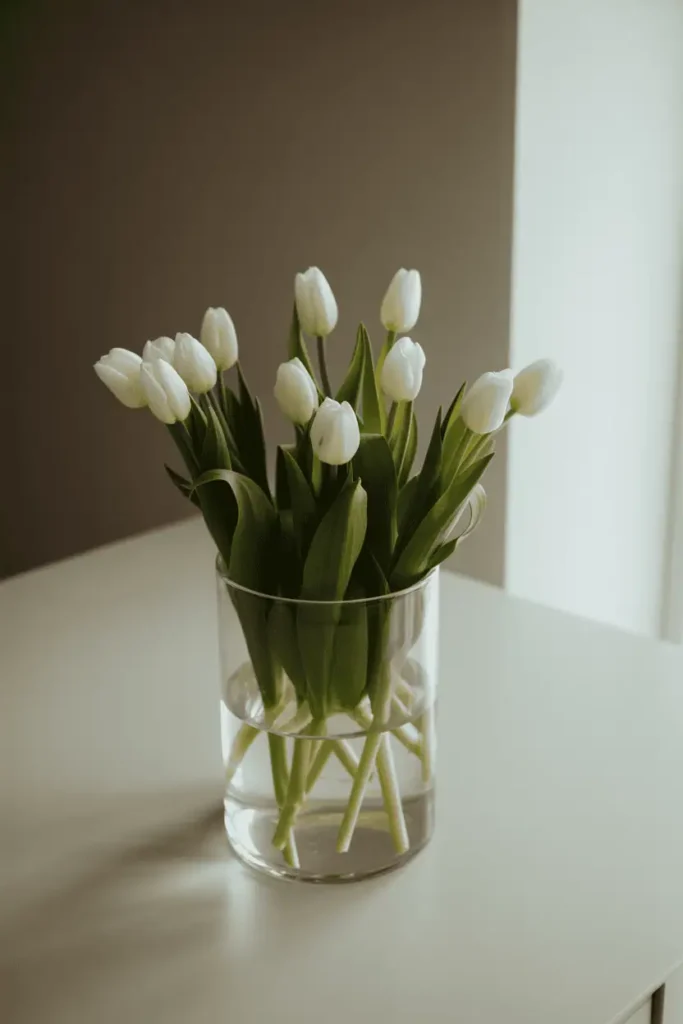
Modern spring arrangements lean minimal—fewer stems, more breathing room, and simpler vessels. Instead of packing flowers tightly into a vase, let them spread out naturally with space between each stem.
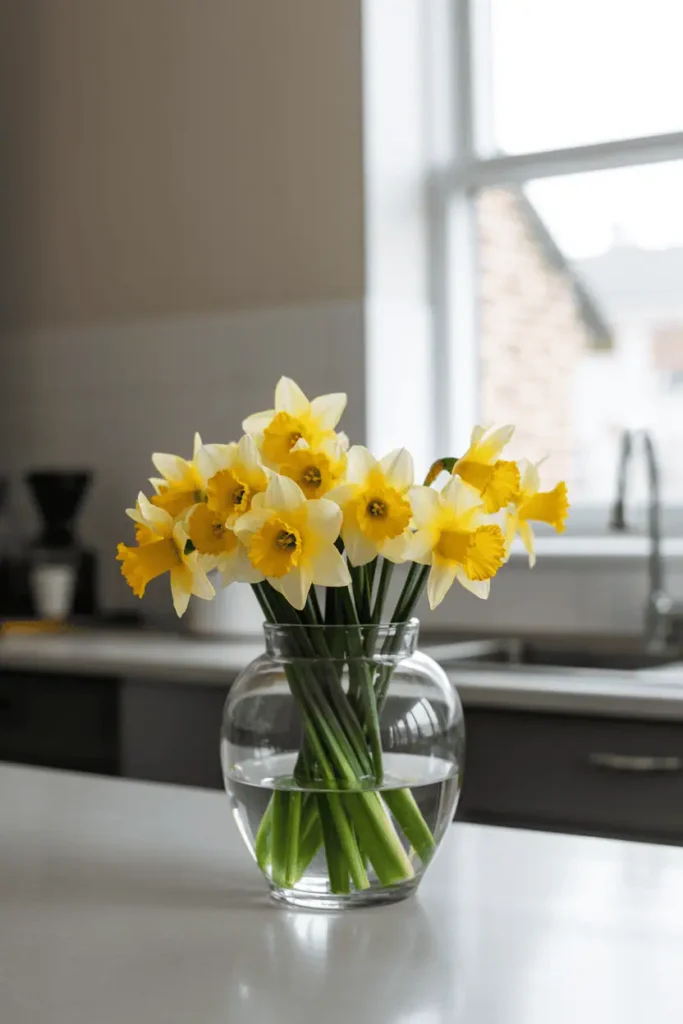
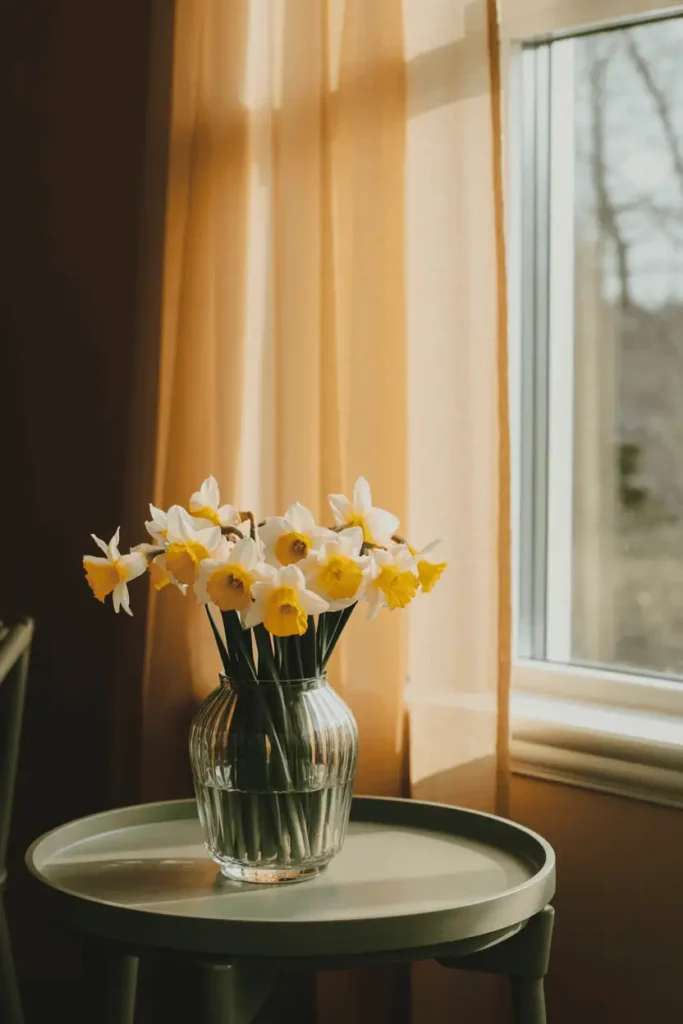
Choose one or two types of flowers rather than mixing five different varieties. Monochromatic arrangements—all white tulips, all yellow daffodils, all pale pink ranunculus—feel more sophisticated and less busy. The simplicity lets you appreciate the form of each individual flower.
Glass vessels work well for modern arrangements because they keep the focus on the flowers themselves. Clear glass also shows the stems, which adds another layer of visual interest. If you prefer ceramic or stoneware, stick with neutral tones—cream, white, soft gray—that don't compete with the blooms.
Small Flower Arrangements for Tight Spaces
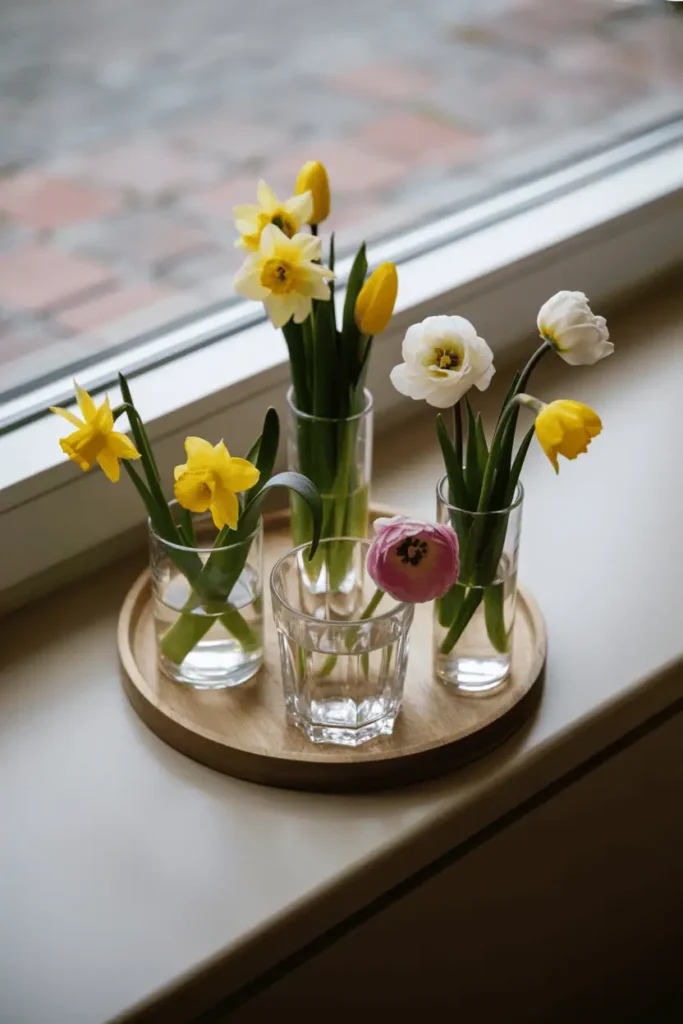
Not everyone has room for large centerpieces. Small arrangements work better in apartments, on kitchen counters, or in bathrooms where space is limited.
A small bunch of flowers in a juice glass or short tumbler fits on a narrow shelf, a bedside table, or even a windowsill. Three to five stems are enough. Any more and the arrangement starts to look crowded.
Quick styling tip: Group several small arrangements together rather than spreading them out. Three small vases clustered on a tray or cutting board creates more impact than one vase alone and makes even a modest amount of flowers feel intentional.
Spring Centerpieces That Work for Daily Life
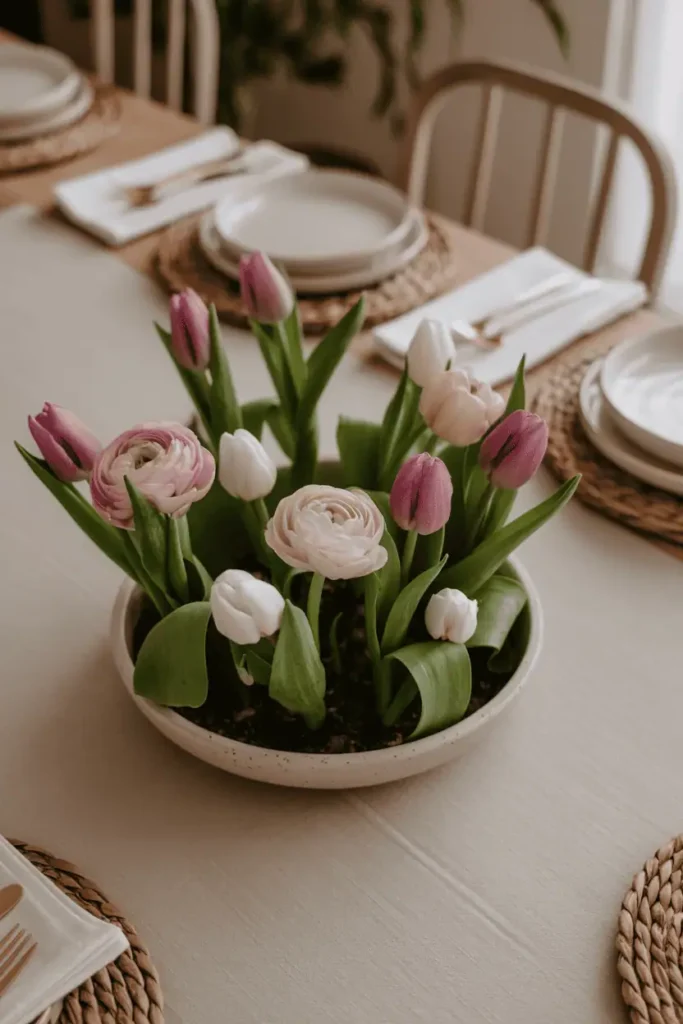
Centerpieces don't need to be formal or fussy. The best ones work for everyday meals, not just dinner parties. A low arrangement that doesn't block sightlines across the table makes conversation easier and doesn't require moving anything when you sit down to eat.
Use shallow bowls, wide-mouth vases, or even vintage crocks for centerpieces. Cut stems short—just a few inches above the rim of the container—so the flowers sit low and full. This approach works especially well with tulips, which tend to droop and bend as they age. Short stems keep them looking intentional even as they relax.
Change the water every two days and trim stems slightly each time. This small maintenance step can extend the life of a centerpiece by several days, which matters when you're buying flowers regularly.
Flower Arrangements That Last Beyond a Few Days
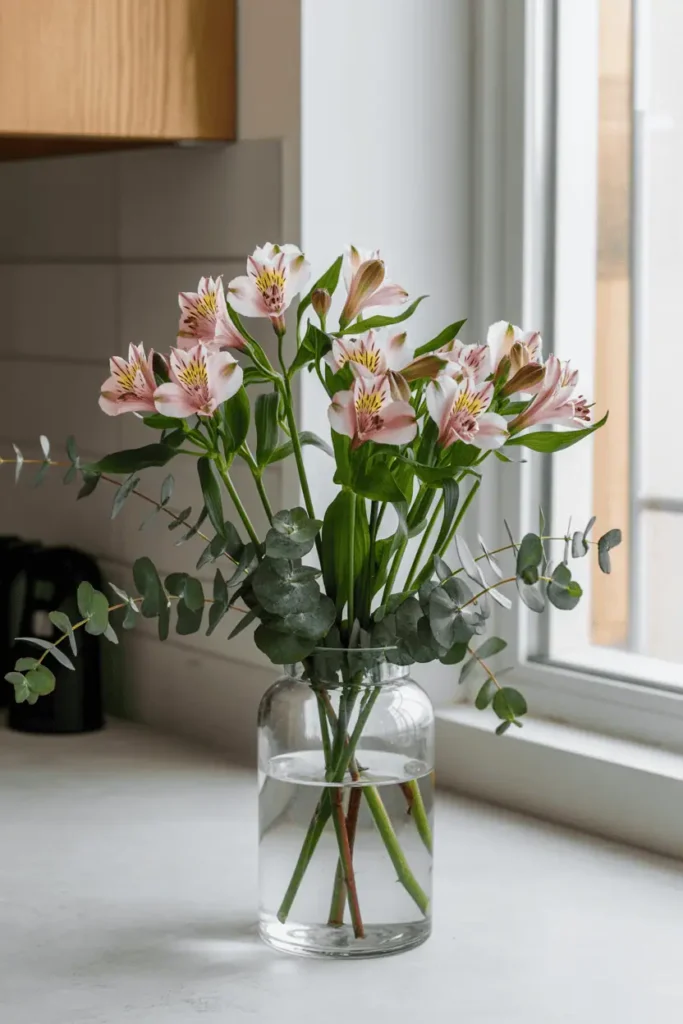
Some flowers hold up better than early spring varieties. Alstroemeria, carnations, and chrysanthemums can last two weeks or more with proper care, which makes them more economical if you're buying flowers weekly.
These longer-lasting blooms don't always feel as "spring" as tulips or daffodils, but they work well when mixed with seasonal greenery or branches. A few stems of alstroemeria combined with eucalyptus or budding forsythia bridges the gap between practical and seasonal.
Longevity also depends on placement. Flowers near heat sources, in direct sunlight, or in warm rooms fade faster. A cooler spot away from windows extends their life, though it might mean sacrificing some visibility. It's a trade-off worth considering if you're trying to stretch a small flower budget.
Mixing Fresh Flowers with Greenery
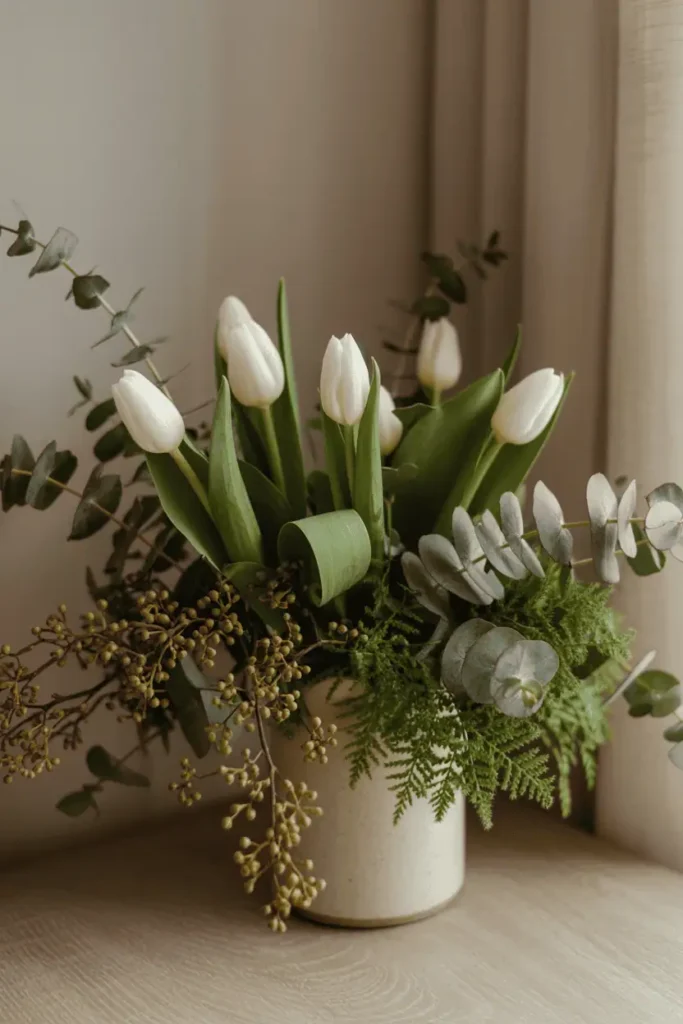
Greenery stretches flowers further and adds texture without additional cost. Eucalyptus, ferns, and ivy all work well as filler and can often be foraged from your own yard or a neighbor's overgrown hedge.
Even grocery stores sell small bunches of greenery—usually eucalyptus or salal—that pair well with almost any flower. A few stems of greenery mixed with tulips or daffodils makes a small bunch look fuller without requiring more blooms.
Greenery also lasts longer than most flowers, which means you can keep it in the vase and swap out faded blooms for fresh ones without starting over entirely. This rotating approach keeps arrangements feeling current without the waste of tossing everything at once.
White and Cream Flowers for a Neutral Base
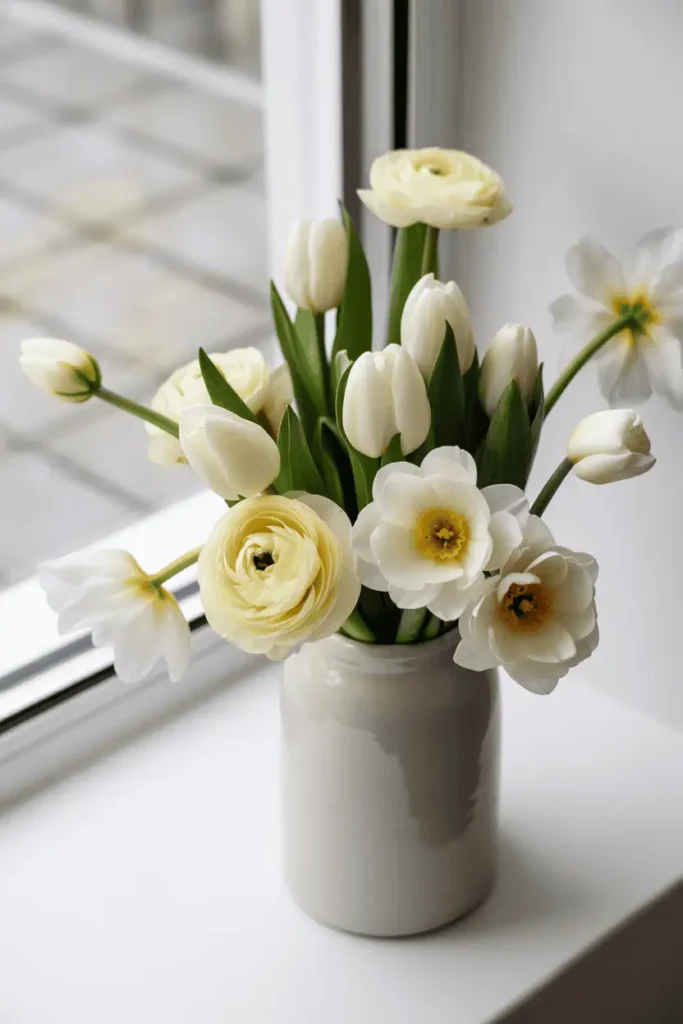
White and cream flowers work in any room and with any color palette. They don't compete with existing decor, and they photograph well in natural light, which matters if you're sharing spaces online.
White tulips, cream ranunculus, white anemones, and pale narcissus all feel fresh without being overly bridal or formal. These tones also layer well—you can mix different white flowers together without worrying about clashing colors.
Neutral flowers make rooms feel lighter and more open, which is especially valuable in early spring when you're trying to shake off the heaviness of winter. They reflect light rather than absorbing it, which brightens a space in a subtle but noticeable way.
Adding Color Without Overwhelming a Space
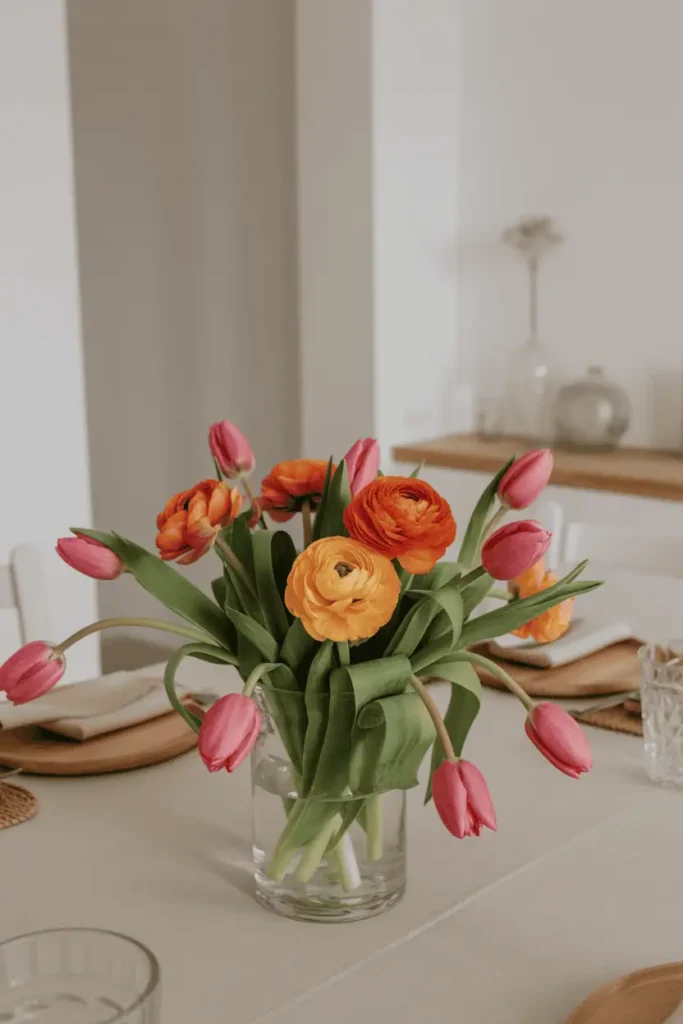
Bright flowers—hot pink tulips, orange ranunculus, deep purple anemones—work best in small doses. A single bold arrangement becomes a focal point, but multiple bright arrangements in one room can feel chaotic.
If you love color, commit to it in one spot and keep the rest of the space neutral. A vibrant centerpiece on a dining table works when the surrounding decor is calm. Bright blooms on a kitchen counter pop when the walls, textiles, and accessories are understated.
Color also depends on the room. A sunny yellow arrangement feels cheerful in a kitchen but might be too energetic in a bedroom. Think about how you want each space to feel, and let that guide your flower choices.
Vessels That Work Across Seasons
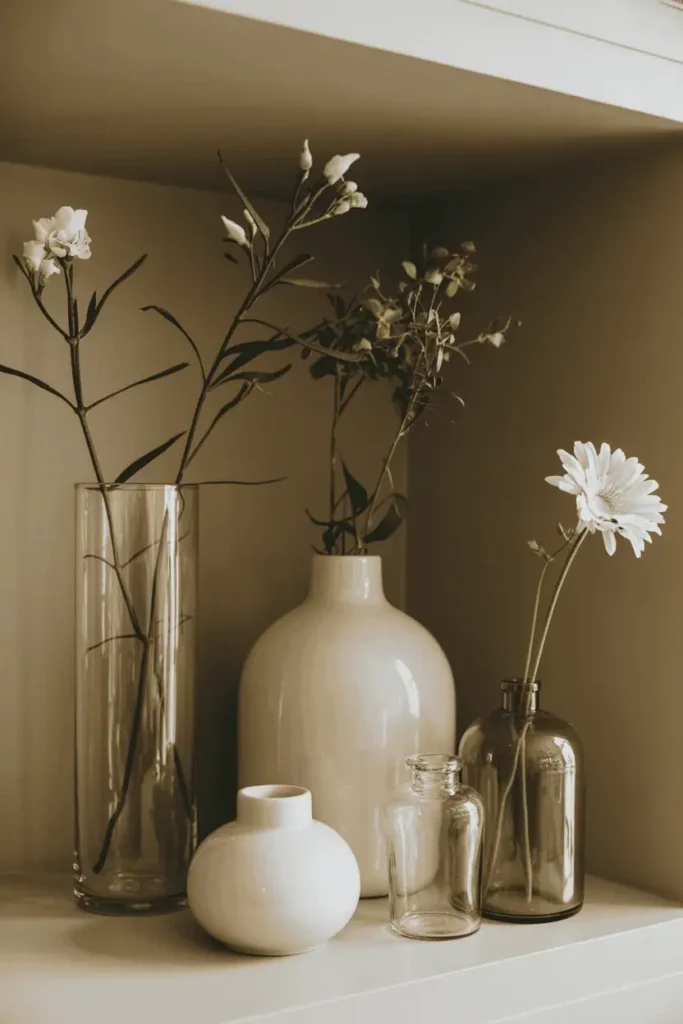
Investing in a few good vases means you're not scrambling every time you bring flowers home. A tall clear cylinder, a wide-mouth ceramic vase, and a few small bud vases cover most arrangements you'll want to create.
Avoid overly decorative or themed vases. A plain glass vase works for modern, traditional, and eclectic spaces. A simple stoneware vessel in cream or white does the same. These neutral containers let the flowers be the focus and don't lock you into a specific style.
Thrift stores and estate sales are great sources for vintage vases and glass bottles. Old milk bottles, apothecary jars, and ceramic crocks all work beautifully for spring flowers and cost a fraction of new options. The slight imperfections and patina add character that new pieces lack.
Flowers That Double as Scent
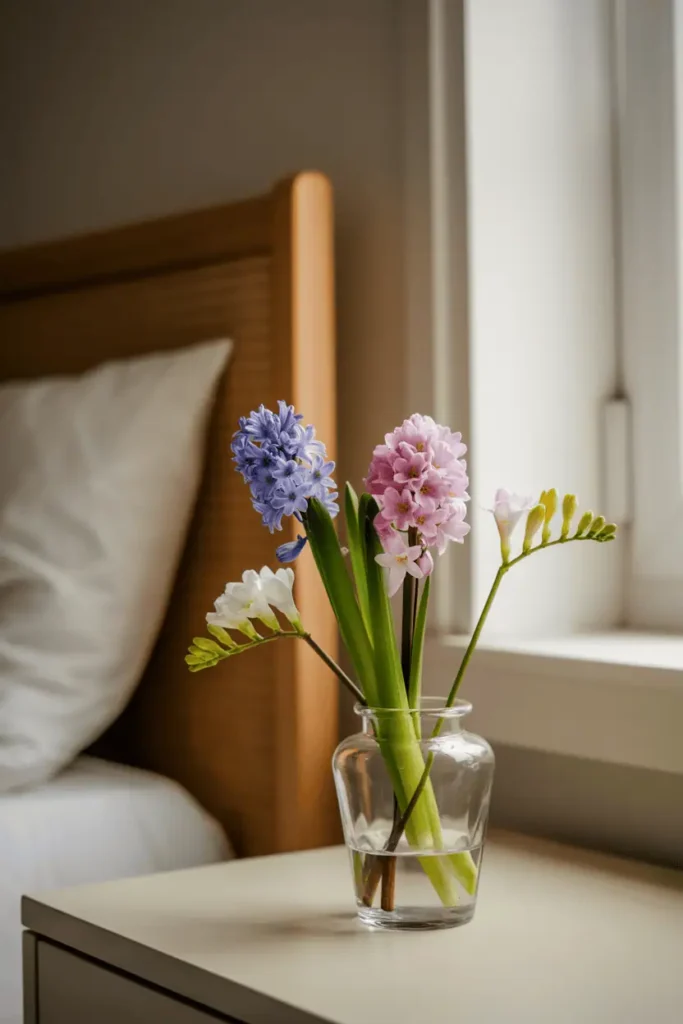
Some early spring flowers bring fragrance along with visual appeal. Hyacinths, narcissus, and freesia all have distinct scents that can fill a room without candles or diffusers.
Place fragrant flowers in spaces where you'll notice them—entryways, bathrooms, or bedrooms. A single stem of hyacinth on a nightstand scents the room gently overnight. A small bunch of freesia near the front door greets you every time you walk in.
Keep in mind: Strong floral scents aren't for everyone. If you're sensitive to fragrance, stick with unscented blooms like tulips, ranunculus, or anemones. These flowers offer all the visual benefits without affecting the air quality of your home.
Dried and Preserved Flowers as Backups
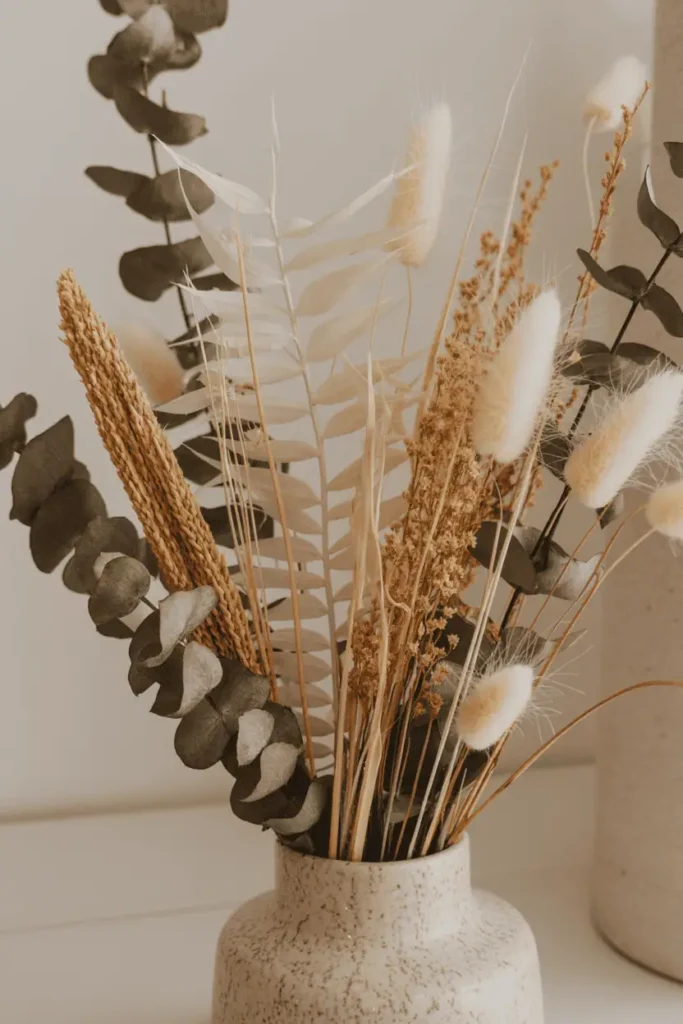
Fresh flowers aren't always practical. Dried arrangements offer a low-maintenance alternative that still brings organic texture into a space.
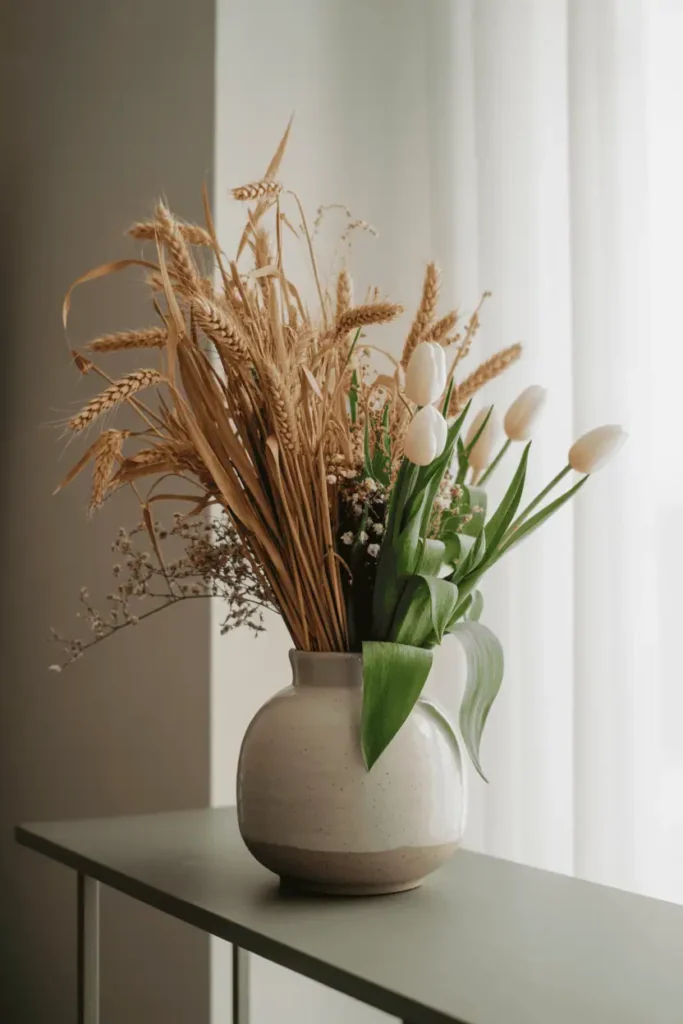
Dried grasses, bunny tails, and preserved eucalyptus last indefinitely and require no water or upkeep. They work well in spaces where fresh flowers would be impractical—high shelves, bathrooms without counters, or rooms that don't get much natural light.
Preserved flowers can also be mixed with fresh stems. A base of dried grasses or wheat paired with a few fresh tulips gives you the best of both—longevity and seasonal freshness. Swap out the fresh stems as they fade and the arrangement continues to work.
Seasonal Timing and When to Start
Early spring flowers start appearing in stores and markets as early as late February in warmer climates and by mid-March in colder regions. This is the time to begin swapping out winter decor for lighter, fresher elements.
You don't need to go all-in at once. Start with one arrangement and see how it feels. Add another the following week. Let the transition happen gradually rather than forcing a full seasonal overhaul in one afternoon.
These floral ideas work well into late April and even early May, especially if you rotate flower types as the season progresses. Tulips and daffodils give way to peonies and garden roses, but the vessels and styling approach remain the same.
Budget-Friendly Alternatives
Flowers can add up quickly if you're buying fresh stems every week. A few strategies help keep costs manageable without sacrificing the look.
- Buy flowers at the beginning of the week when grocery stores restock and selection is best
- Choose single-variety bunches rather than pre-made mixed bouquets—they're often cheaper and look more intentional
- Trim and split large bunches into multiple smaller arrangements for different rooms
You can also alternate weeks—fresh flowers one week, branches or greenery the next. This rotation keeps things interesting and reduces cost while still bringing organic elements into your home regularly.
Mistakes to Avoid
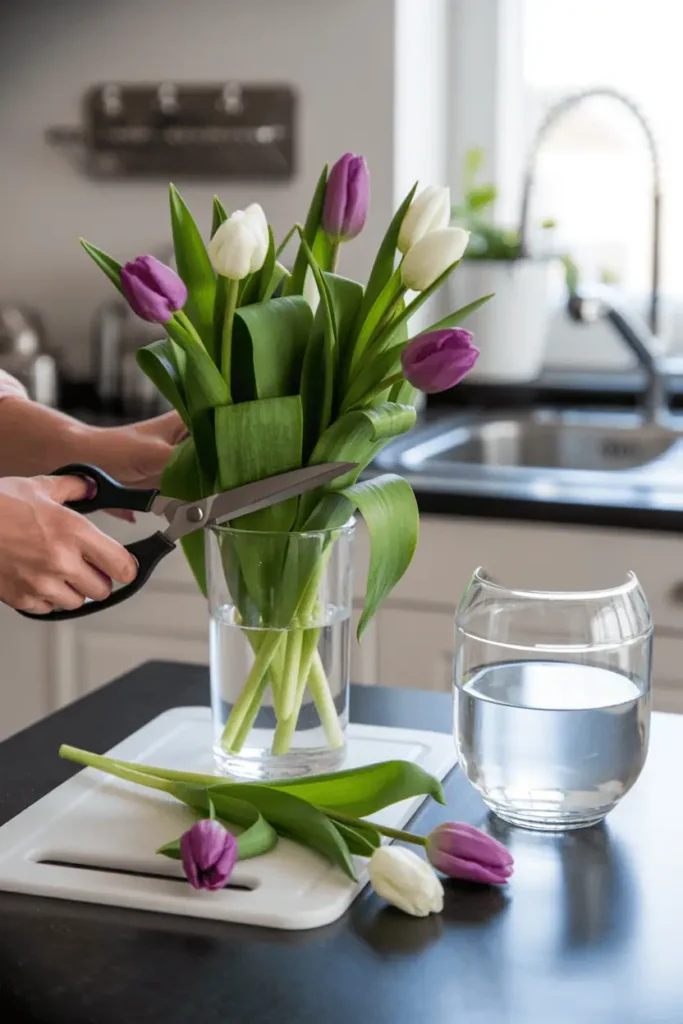
Overcrowding a vase makes flowers compete for water and shortens their lifespan. Give each stem room to breathe, even if it means using a larger vessel or creating two smaller arrangements instead of one packed bouquet.
Forgetting to change the water is the fastest way to lose flowers early. Stale water breeds bacteria that clogs stems and prevents them from drinking. A quick rinse and refill every two days makes a noticeable difference.
Placing arrangements in direct sunlight or near heat vents might seem appealing for visibility, but it causes flowers to wilt faster. Choose spots with indirect light and moderate temperatures for the longest-lasting blooms.
Floral decor for early spring doesn't require expertise or a big budget. It's about noticing what's available, choosing a few stems that feel right, and placing them where they'll actually be seen. The process should feel simple, not stressful.
Start with one small arrangement this week. Notice how it changes the room. Pay attention to which flowers last longest and which vessels you reach for most often. Let your approach evolve based on what works in your home, not what looks good in someone else's photos.
Save ideas that resonate, and come back to them when you're ready to try something new. For more seasonal styling and practical home inspiration, explore other guides focused on real spaces and realistic routines.