Lighting greatly affects how a room feels and works. A well-lit space is welcoming and useful. This guide offers tips on choosing the right fixtures for your home.
Whether it's a bright kitchen or a cozy bedroom, picking the right lighting is key. These tips will help you mix style and function in every room. Let's explore how to make your spaces brighter and more inviting!
Understanding Lighting Types
Every room needs the right mix of light. There are three main types: ambient, task, and accent. These types work together to make spaces both useful and welcoming.
Ambient Lighting
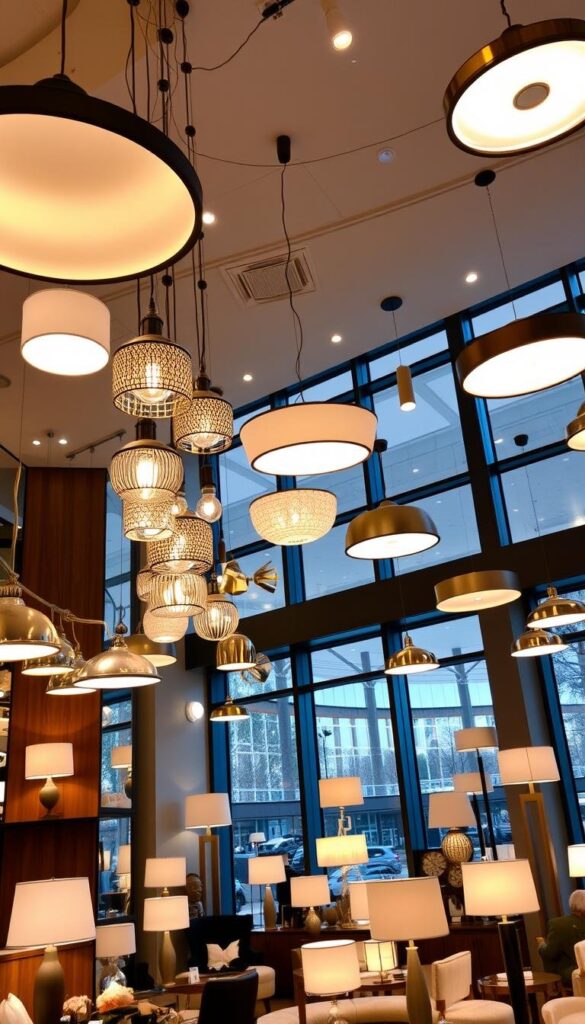
Ambient lighting sets the mood. It includes ceiling lights or recessed lights for overall light. Think of it as the room's base layer, giving even light without glare.
A chandelier or a flush mount can add soft, all-over light. This is perfect for relaxing.
Task Lighting
Task lights focus on work areas. In kitchens, under-cabinet LEDs or desk lamps in offices are great. They help prevent eye strain and improve work.
Accent Lighting
Accent lights add drama. Track lights can highlight art, while strip lights under shelves add interest. This type makes rooms feel lively by focusing on textures and decor.
The Importance of Layering Light
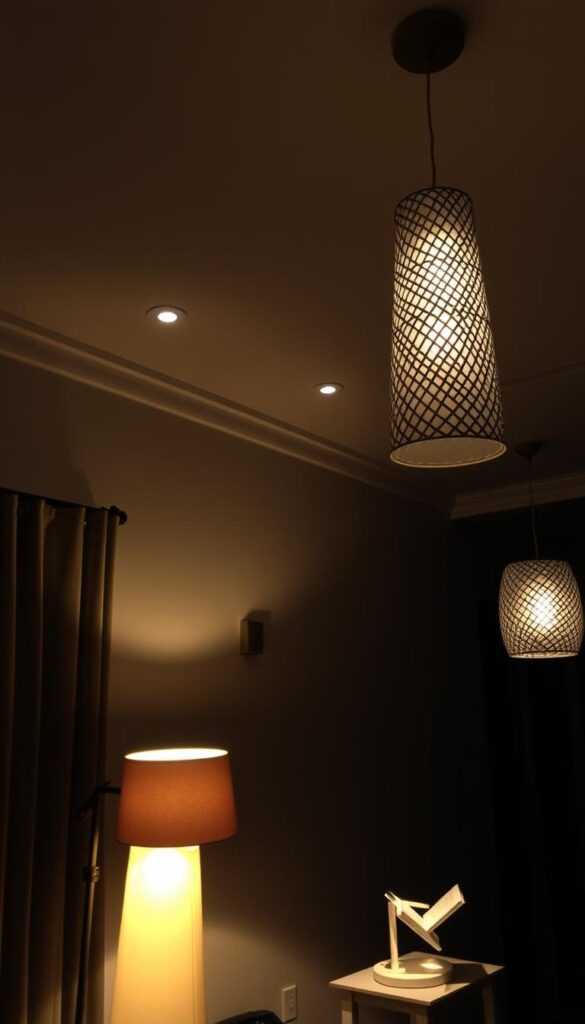
Layering light makes any space come alive. It combines different types of light to create a balance. This way, rooms feel welcoming and useful at the same time.
Creating Balance with Layers
Begin by mixing overhead lights with smaller spotlights or table lamps. For instance, a chandelier in the dining room is better with under-cabinet LEDs or floor lamps. This combination ensures light is spread out, easing eye strain and focusing on important areas.
Benefits of Layered Lighting
- Flexibility: Adjust brightness levels for movie nights or dinner parties.
- Depth: Wall washers and picture lights add texture to plain walls.
- Efficiency: Targeted fixtures save energy by avoiding over-lighting.
Think of layers like paint strokes—each adds character. Creative lighting solutions let you tailor spaces to fit your lifestyle, whether you’re crafting a cozy nook or a bright workspace.
Choosing the Right Fixture Style
Lighting design starts with matching fixtures to your room's style. Do you prefer modern or traditional? This choice sets the mood. Here's how to choose the right style:
Modern vs. Traditional Fixtures
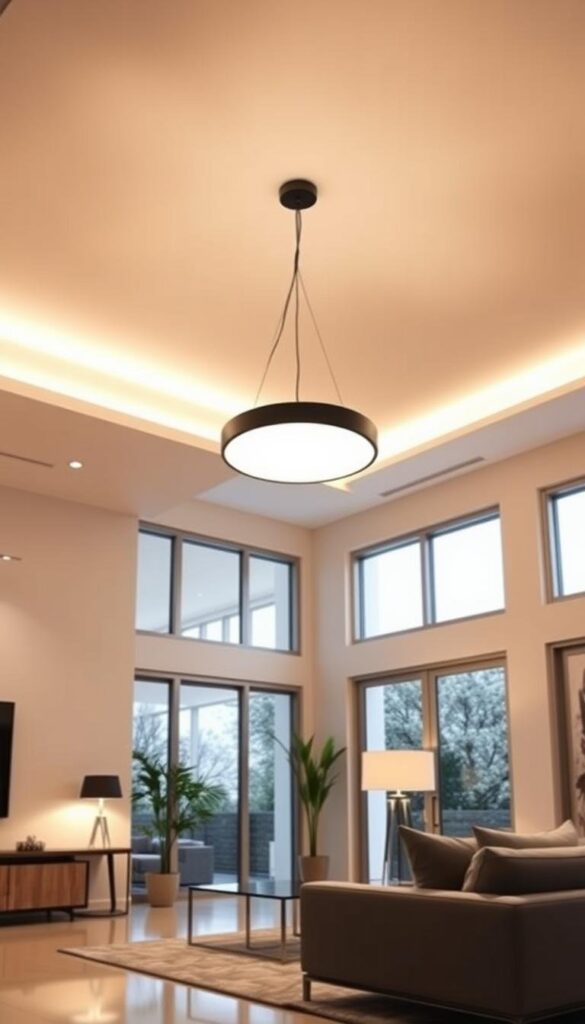
Modern fixtures are all about simplicity. They have clean lines, geometric shapes, and materials like brushed metal. Traditional fixtures, on the other hand, have ornate details like scrolled arms and crystal accents.
Matching Fixtures to Room Decor
“A light fixture is the exclamation point of a room’s design.”
Match fixtures with your room's elements. For example:
- Rustic rooms: Industrial pendant lights with iron or reclaimed wood
- Mid-century spaces: Brass sconces or tapered drum shades
- Coastal themes: Weathered finishes or nautical-inspired shapes
Combine form and function. A bold chandelier in a dining room adds drama and light. In a kitchen, under-cabinet LED strips (task lighting) can complement modern fixtures. Always check the size: a big fixture in a small room might be too much, but a small one in a big ceiling feels lost. Let lighting design principles help you find the right balance.
Assessing Room Size and Height
Choosing the right lighting fixture starts with measuring your room’s dimensions. Room size and ceiling height affect how light spreads and the ambiance. Smaller spaces need carefully scaled fixtures to avoid feeling cramped. Taller rooms might require different bulb types for even coverage.
These decisions also tie into energy-efficient lighting tips that balance style and savings.
Scale Matters: Picking the Right Size Fixture
A good rule for fixture sizing: add the room’s length and width in feet, then use that sum in inches for the fixture’s width. For example, a 10x12-foot room pairs well with a 22-inch-wide fixture. Oversized fixtures in small spaces can overwhelm and waste energy.
Instead, group smaller pendants or sconces to distribute light efficiently. This approach aligns with energy-efficient lighting tips by reducing reliance on high-wattage bulbs.
Ceiling Height Considerations
Rooms with ceilings over 8 feet may need taller fixtures or directional lights to prevent a “floaty” look. LED bulbs in these areas cast light farther, cutting down on the number of fixtures needed. Lower ceilings benefit from flush-mount fixtures to maintain a cozy feel.
Always check bulb specifications to ensure they match your setup’s energy-saving goals.
Properly scaled fixtures and smart bulb choices keep spaces bright without excess energy use. Next, we’ll explore how bulb types and brightness levels build on these choices for optimal results.
Light Bulb Basics
Choosing the right bulbs is key to perfect lighting layout tips. LEDs, incandescent, and other types each offer special benefits for your home's lighting.
Types of Bulbs: LED, Incandescent, and Beyond
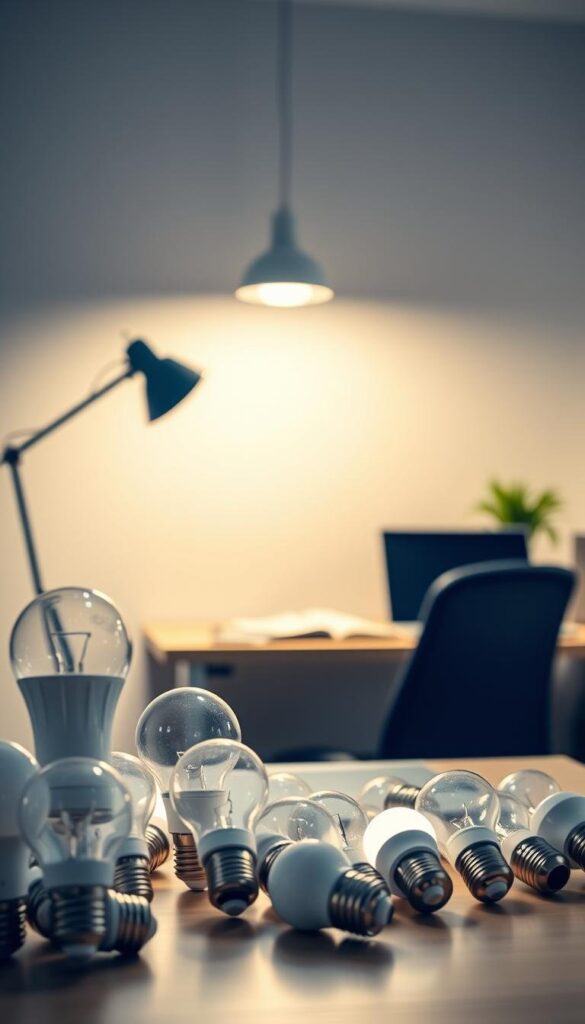
- LED bulbs: Philips and Cree LEDs use 75% less energy than incandescent bulbs, lasting up to 25,000 hours. They're perfect for busy areas in smart lighting layout tips.
- Incandescent: They have a warm, classic glow but don't last long. Best for occasional use, not for long-term lighting.
- CFL and Halogen: CFLs save energy but take time to warm up. Halogens give bright light but produce more heat.
Lumens vs. Watts: Brightness Simplified
Focus on lumens (brightness) instead of watts (energy use). A 800-lumen bulb is as bright as a 60-watt incandescent. For areas like kitchens, aim for 1,500–2,000 lumens.
“Lumens light the way—prioritize them over watts for better visibility.”
Smart lighting layout tips begin with matching bulb specs to your space. LEDs save energy, while lumens ensure you're always well-lit.
Color Temperature and Its Effects
Color temperature changes how light affects a space. It's measured in Kelvin and decides if a room feels cozy or lively. In LED lighting design, the right temperature makes a big difference in both function and mood.
Warm vs. Cool Light
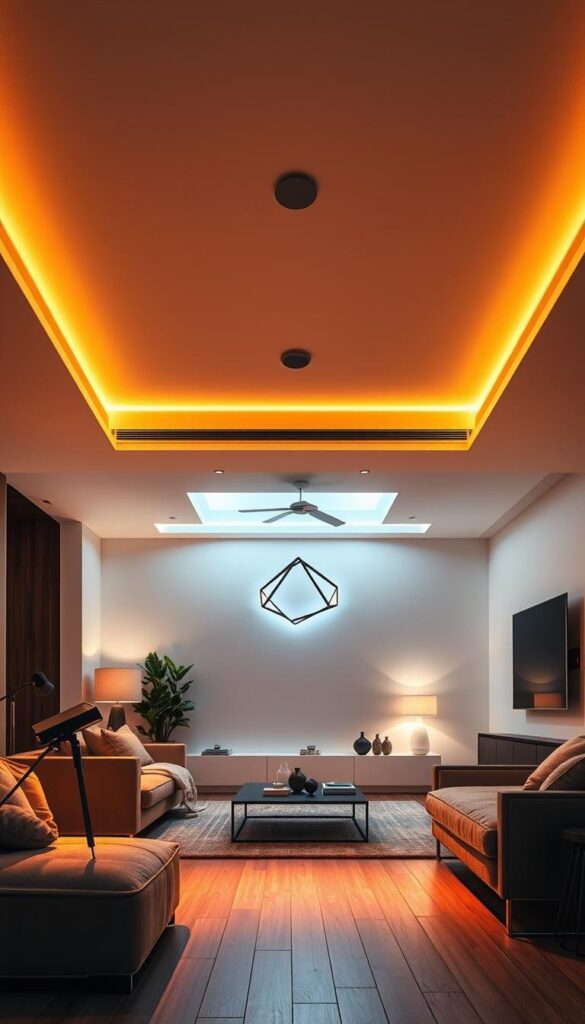
- Warm light (2000K-3000K): Soft amber tones make a room feel calm. Great for bedrooms or dining areas.
- Cool light (3500K-5000K): Crisp white tones increase alertness. Best for kitchens or home offices.
Choosing the Right Temperature for Each Room
Bedrooms need warm tones for a cozy feel. Kitchens and bathrooms do better with cool tones for clear tasks. Living rooms can mix both with layered LED lighting design for both energy and comfort.
Tip: Use dimmers to change warmth as needed. LEDs let you control light without losing efficiency. Think about the room's purpose—relaxation or work—to choose the best color.
Lighting for Different Rooms
Lighting in each room should match its purpose. Today, we mix function with style. Let's see how to do this in key areas.
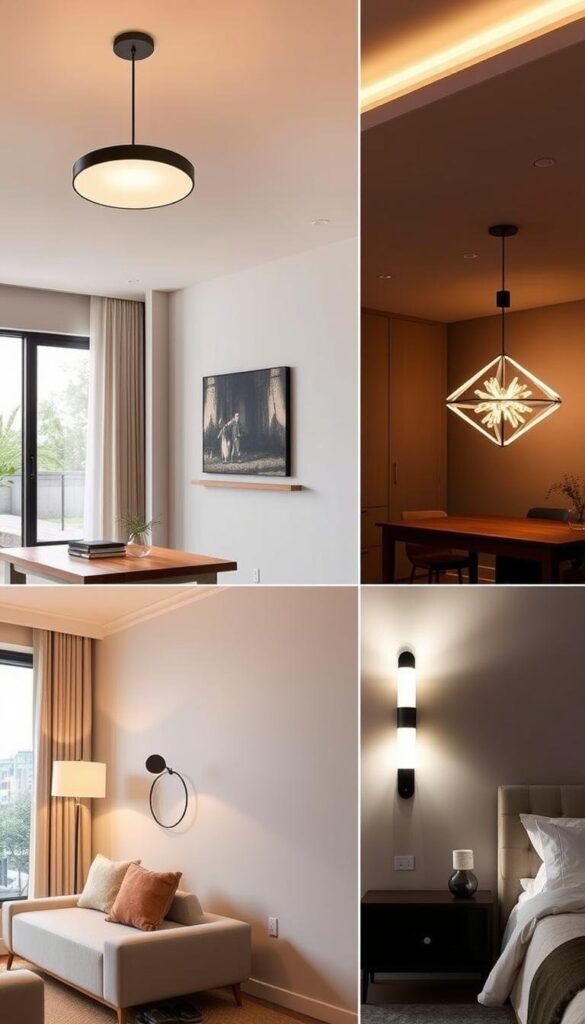
The living room's lighting creates the mood. Modern designs use a mix of recessed or track lights and eye-catching fixtures.
Living Room Lighting Essentials
Begin with ambient lighting like recessed lights. Add table or floor lamps for cozy reading spots. A striking pendant light above your seating adds flair. Tip: Dimmers help adjust the light for movies or chats.
Kitchens need to be both useful and stylish. Today's kitchens combine practical lighting with sleek overhead options.
Kitchen and Dining Lighting Tips
- Under-cabinet LEDs for counter work
- Pendant lights over islands for visual interest
- Recessed lighting as a base layer
Bedrooms are all about comfort. Modern designs blend soft lighting for relaxation with reading lights by the bed.
Bedroom Lighting Ideas
Dimmable wall sconces offer adjustable light. Nightstands with table lamps provide reading light. Choose softer options like drum shades over harsh overhead lights.
Bathrooms need to be safe and bright. Modern vanities use bright task lighting. Waterproof fixtures are key near water.
Bathroom Lighting Considerations
Mount vanity lights above sinks to cut shadows. Pick fixtures safe for damp areas. Frosted glass or sleek LED strips are favorites.
“A well-lit bathroom needs task and ambient light for safety and style.”
Prioritizing Functionality
Good lighting is both useful and attractive. It's important for fixtures to work well, not just look good. For example, outdoor lights are designed to be safe and stylish, guiding us while making our homes look better.
Functional vs. Decorative: Finding the Right Mix
Some lights, like recessed ones, are all about getting the job done. Others, like fancy chandeliers, are all about looks. The best choice is a light that does both. Think of a patio light that's both warm and stylish.
Multipurpose Fixtures That Shine
- Task + style: Pendant lights over kitchen islands combine illumination with design.
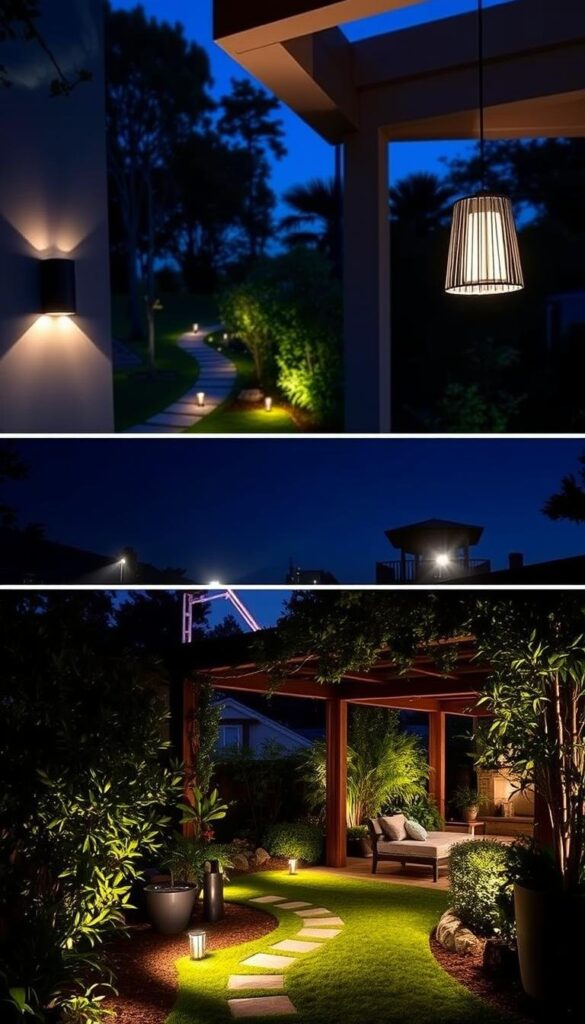
- Outdoor lighting ideas: Pathway lights double as safety features and garden accents.
- Flexibility: Adjustable desk lamps adapt to reading or work needs.
“Good design serves purpose without sacrificing beauty.”
Outdoor lights, like solar-powered ones, show how to be both useful and pretty. They save energy, keep us safe, and match our gardens. It's possible to have lights that are both functional and stylish.
Using Dimmers for Versatility
Dimmers make lighting more than just a necessity. They let you change the light's brightness with a simple action. This makes them a key part of lighting design tips, blending style with function.
Benefits of Dimmers
- Create mood shifts: Dim lights for dinner or brighten for tasks.
- Cut energy use by reducing output when full brightness isn’t needed.
- Extend bulb lifespan by lowering intensity over time.
Where and How to Install Dimmers
Install dimmers in rooms where light levels matter most:
- Living rooms: Adjust ambiance for TV time or gatherings.
- Bedrooms: Soften light for bedtime routines.
- Kitchens: Brighten for cooking, dim for meals.
Make sure bulbs are dimmable and switches fit your fixtures. Most dimmers work well with standard setups. But, always check the manufacturer's guide for details.
Outdoor Lighting Considerations
Adding lighting to your home's outside makes it welcoming and safe. Outdoor lights are not just pretty; they also help guide visitors and show off your garden. We'll look at how to mix beauty with safety.
Types of Outdoor Fixtures
- Path lights: Low-profile fixtures cast gentle pools of light along walkways.
- Wall-mounted sconces: Brighten entries without overpowering smaller spaces.
- Post lanterns: Offer broad illumination for driveways or patios.
- String lights: Add warmth to decks or gardens during gatherings.
Safety and Security with Outdoor Lighting
Motion-sensor lights scare off intruders and save energy. Put them near doors or dark spots. Make sure lights are at least 7 feet high to avoid glare. For interior lighting design that matches, choose lights that fit your home's style. Modern homes look great with LED strips, while cottages are perfect for rustic lanterns.
“Well-placed lighting is the first line of defense for any home,” says the National Safety Council.
Use a mix of lights like Kichler's solar path lights and bright task lights near garages. Choose warm tones (2700K-3000K) for a cozy feel without hurting night vision. Whether it's your porch or garden, smart lighting choices make your space safe and stunning.
Embracing Smart Lighting Technology
Smart lighting systems add modern convenience to home design. They let you adjust ambient lighting techniques with just a tap. This creates personalized spaces. You can dim lights for relaxation or sync colors with your mood.
Advantages of Smart Home Lighting
- Energy savings through automated schedules
- Remote control via apps or voice commands
- Customizable color and brightness settings
How to Integrate Smart Technology
Begin by pairing LED bulbs with a hub like Philips Hue or LIFX. Connect your fixtures to Wi-Fi and use presets for various activities. For example, set a “dinner” mode to dim lights for meals or “movie night” for deeper tones.
“Smart lighting reduces energy waste by 25% when programmed properly.”
Upgrading with smart switches is easy. They work with your existing wiring. Use timers to save power or sensors to turn lights on automatically. Check out brands like Google Nest or Amazon Alexa for easy home automation. Start with one smart bulb and see how it changes your space.
Common Lighting Mistakes to Avoid
Even with the right knowledge, lighting errors can happen. Overly bright or dim fixtures, mismatched styles, or ignoring room size can all lead to less-than-ideal results. These tips help fix common issues and keep spaces functional and inviting.
Overly Bright or Dim Options
Extreme brightness or dimness can disrupt a room’s vibe. A kitchen island needs enough task lighting, but too much glare can strain eyes. Bedrooms benefit from softer tones, while bathrooms require clear visibility.
Use dimmers to adjust levels and layer lighting as covered earlier. Check bulb lumen ratings to match the space’s needs.
Pairing creative lighting solutions with smart tech helps balance brightness and style. Avoid one-size-fits-all choices—mix fixtures that adapt to different tasks. For example, adjustable sconces or dimmable bulbs work better than fixed options.
Applying these tips ensures lighting feels natural and enhances every area without overwhelming it.