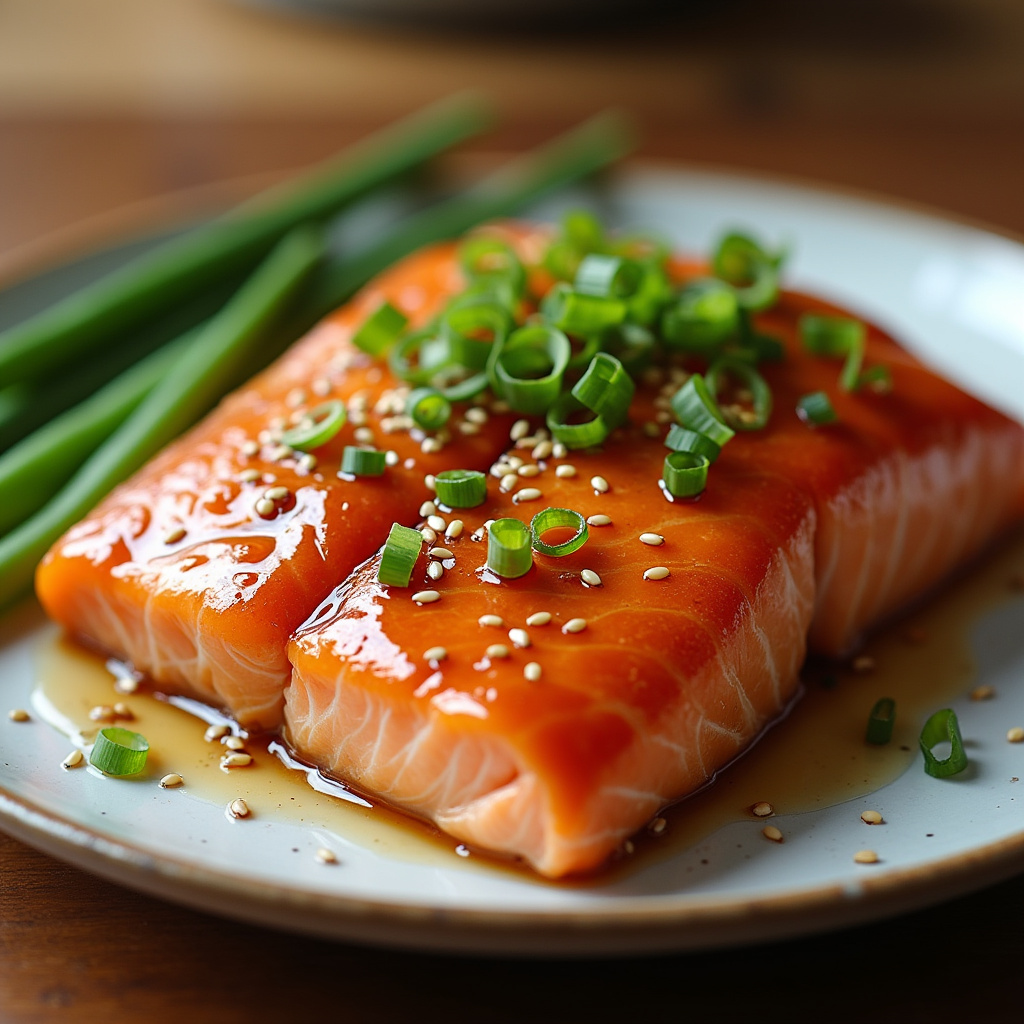
This honey garlic salmon is what happens when you need dinner on the table in under 30 minutes but want it to taste like you actually planned ahead. The glaze caramelizes into this gorgeous golden coating that's sweet, garlicky, and just barely sticky. I make this at least twice a month because it feels fancy enough for company but easy enough for a random Tuesday. You're going to love how quickly this comes together — and how incredible your kitchen smells while it's cooking.
Why You'll Love This Recipe
- ✓Ready in 20 minutes total — perfect for those nights when takeout feels tempting but you want something healthier
- ✓The glaze uses pantry staples you probably already have — no specialty ingredients required
- ✓Works with any salmon cut — fillets, portions, or even salmon steaks if that's what's on sale
- ✓Naturally gluten-free and dairy-free without any recipe modifications
- ✓The leftovers actually reheat beautifully — flake them over salads or grain bowls the next day
- ✓Impressive enough that guests think you spent way more time on it than you actually did
Prep Time
5 mins
Cook Time
15 mins
Total Time
20 mins
Servings
4
Ingredients
You'll need just a handful of ingredients to make this honey garlic salmon shine.
For the Salmon:
- 4 salmon fillets (about 6 oz/170g each), skin-on or skinless
- 2 tablespoons olive oil (30ml)
- ½ teaspoon salt (3g)
- ¼ teaspoon black pepper (1g)
For the Honey Garlic Glaze:
- ⅓ cup honey (110g)
- ¼ cup soy sauce or tamari (60ml)
- 5 cloves garlic, minced
- 2 tablespoons water (30ml)
- 1 tablespoon rice vinegar or apple cider vinegar (15ml)
- 1 teaspoon fresh ginger, grated (5g) — optional but so good
- ¼ teaspoon red pepper flakes (1g) — optional for heat
- 1 tablespoon cornstarch (8g)
For Garnish:
- 2 tablespoons fresh parsley or cilantro, chopped
- Sesame seeds
- Lemon wedges
If you can't find fresh ginger, use ¼ teaspoon ground ginger instead. For a gluten-free version, make sure you're using tamari instead of regular soy sauce. Wild-caught salmon works beautifully here, but farmed salmon is totally fine too — just pat it really dry before seasoning.
How to Make Honey Garlic Salmon
This recipe comes together in one skillet with minimal cleanup and maximum flavor.
- Prep the salmon. Pat the salmon fillets completely dry with paper towels — this helps them get a nice sear. Season both sides with salt and pepper. Let them sit at room temperature for 5 minutes while you make the glaze.
- Make the honey garlic glaze. In a small bowl, whisk together honey, soy sauce, water, rice vinegar, grated ginger, and red pepper flakes if using. In a separate tiny bowl, mix the cornstarch with 1 tablespoon of cold water until smooth, then whisk it into the honey mixture. Set aside.
- Sear the salmon. Heat olive oil in a large skillet over medium-high heat until it shimmers, about 2 minutes. Add the salmon fillets skin-side up (or presentation-side down if skinless). Cook without moving them for 4-5 minutes until you get a golden-brown crust.
- Flip and start glazing. Carefully flip the salmon fillets. Reduce heat to medium. Pour the honey garlic sauce around the salmon (not directly on top yet). Let it bubble and start to thicken, about 1 minute.
- Baste and finish cooking. Use a spoon to baste the salmon with the bubbling glaze repeatedly. Cook for another 4-5 minutes, continuing to baste every 30 seconds or so, until the salmon reaches 145°F (63°C) in the thickest part and the glaze has reduced to a sticky, glossy coating.
- Add the garlic. Push the salmon to one side of the pan. Add the minced garlic to the empty space and cook in the glaze for 30-45 seconds until fragrant and golden. Stir the garlic into the glaze and spoon it over the salmon one final time.
- Rest and serve. Remove from heat and let the salmon rest in the pan for 2 minutes — the glaze will thicken even more as it cools slightly. Transfer to plates, spoon extra glaze over the top, and garnish with fresh herbs, sesame seeds, and lemon wedges.
💡 Baker's Tips
Don't skip the cornstarch: It's what makes the glaze thick and glossy instead of thin and runny. If you skip it, your sauce won't coat the salmon properly and you'll lose that gorgeous shine.
Watch your heat: If the glaze starts burning or smoking, reduce the heat immediately. Honey burns quickly, so medium heat is your friend once you add the sauce.
Check for doneness: Salmon is done when it flakes easily with a fork and looks opaque in the center. Slightly underdone is better than overdone — it'll keep cooking as it rests.
Recipe Variations
◆ Spicy Honey Garlic Salmon
Add 1-2 teaspoons of sriracha or gochujang to the glaze for a sweet-spicy kick. You can also double the red pepper flakes and add a pinch of cayenne. This version pairs incredibly well with cooling cucumber salad or coconut rice.
◆ Citrus Honey Garlic Salmon
Replace the water in the glaze with fresh orange juice and add 1 teaspoon of orange zest. The citrus brightens everything up and adds a restaurant-quality finish. Garnish with orange slices instead of lemon for a gorgeous presentation.
◆ Sesame Honey Garlic Salmon
Add 1 tablespoon of toasted sesame oil to the glaze and finish with a generous sprinkle of toasted sesame seeds. This gives the sauce a deeper, nuttier flavor that works beautifully with steamed bok choy or Asian-style slaw. You can also add a handful of thinly sliced green onions right at the end.
What to Serve With Honey Garlic Salmon
This salmon pairs beautifully with so many sides — here are some of our favorites:
- Fluffy white rice or jasmine rice — it soaks up all that gorgeous glaze perfectly
- Roasted vegetables — try broccoli, asparagus, or Brussels sprouts tossed with olive oil and roasted at 425°F (220°C) for 20 minutes
- Garlic green beans — sauté them quickly in the same pan after you remove the salmon to save on dishes
- Mashed sweet potatoes or cauliflower mash — the creaminess balances the sticky-sweet glaze
- Simple salad — a crisp cucumber and avocado salad with a light vinaigrette cuts through the richness
- Quinoa or farro — for a heartier, more filling meal with extra protein and fiber
Storage & Make-Ahead Tips
Refrigerator: Store leftover salmon in an airtight container in the fridge for up to 3 days. Keep any extra glaze in a separate container. Reheat gently in a skillet over low heat or in the microwave at 50% power to avoid drying it out.
Freezer: You can freeze cooked salmon for up to 2 months, though the texture won't be quite as perfect when thawed. Wrap individual portions tightly in plastic wrap, then place in a freezer bag. Thaw overnight in the fridge and reheat gently. The glaze freezes beautifully — store it separately and reheat on the stovetop.
Make-Ahead: You can make the glaze up to 3 days in advance and store it in the fridge. Just give it a good whisk before using. The salmon is best cooked fresh, but you can prep it (pat dry, season) up to 4 hours ahead and keep it covered in the fridge until you're ready to cook.
Meal Prep: This salmon works great for meal prep lunches. Cook a double batch, portion it with rice and veggies, and you've got 4-5 days of lunches ready to go. The glaze keeps everything moist even after reheating.
Common Mistakes to Avoid
✗ Adding Garlic Too Early
Garlic burns incredibly fast in a hot pan with honey. Always add it near the end of cooking — in the last minute — so it gets fragrant and golden without turning bitter. If you add it at the beginning, it'll burn and make the whole dish taste acrid.
✗ Not Drying the Salmon
Wet salmon won't sear properly — it'll steam instead and you'll miss out on that gorgeous golden crust. Use paper towels to pat every surface completely dry before seasoning. This one step makes a massive difference in texture.
✗ Overcooking the Salmon
Salmon cooks fast and keeps cooking after you remove it from heat. Pull it off the stove when it's just barely opaque in the center — around 140°F (60°C) internal temp. It'll reach 145°F as it rests and stay perfectly moist instead of dry and chalky.
✗ Skipping the Basting
The magic of this recipe is repeatedly spooning that bubbling glaze over the salmon as it cooks. This builds up layers of flavor and creates that gorgeous glossy coating. If you just pour the sauce once and walk away, you'll get thin, watery results instead of that thick, sticky glaze we're after.
Frequently Asked Questions
Can I use frozen salmon for this recipe?
Yes, but make sure it's completely thawed first. Thaw it overnight in the fridge, never at room temperature. Once thawed, pat it extremely dry with paper towels — frozen salmon releases extra moisture as it thaws, and you need it bone-dry for a good sear. The cooking time should be the same as fresh salmon.
What if I don't have cornstarch?
You can substitute arrowroot powder in the exact same amount. In a pinch, use 2 teaspoons of all-purpose flour instead of 1 tablespoon cornstarch, but the glaze won't be quite as glossy. Avoid skipping the thickener entirely — your sauce will be too thin and won't stick to the salmon properly.
Can I bake this instead of pan-searing?
Absolutely. Place the seasoned salmon on a lined baking sheet and bake at 400°F (200°C) for 10 minutes. Meanwhile, simmer the glaze in a small saucepan until thickened. Brush half the glaze over the salmon, bake for another 3-5 minutes, then brush with remaining glaze before serving. You won't get the same crispy crust, but it's way easier for feeding a crowd.
How do I know when the salmon is done?
The salmon should flake easily with a fork and look opaque throughout, with just a tiny bit of translucency in the very center. An instant-read thermometer should read 145°F (63°C) in the thickest part. The flesh should look moist, not dry or chalky. When you gently press it, it should feel firm but still have a little give.
Can I make this with other types of fish?
Yes! This glaze works beautifully with other firm fish like halibut, cod, or mahi-mahi. Adjust the cooking time based on thickness — thinner fillets will cook faster. Delicate fish like tilapia or sole might fall apart with all the basting, so stick with firmer varieties. Shrimp also works amazingly well with this glaze — just reduce the cooking time to 2-3 minutes per side.
Why is my glaze not thickening?
Make sure you mixed the cornstarch with cold water before adding it to the glaze — this prevents clumping. The glaze needs to simmer for at least a full minute to activate the cornstarch and thicken properly. If it's still thin, mix another teaspoon of cornstarch with a tablespoon of cold water and add it to the pan. Let it bubble for 30 seconds and it should thicken right up.
Love this recipe? Pin it for later and share it with friends who need an easy weeknight dinner win! 📌
Honey Garlic Salmon
Perfectly glazed salmon fillets with a sweet and savory honey garlic sauce that caramelizes beautifully.
Cook: 15 min
Total: 25 min
Serves: 4
🧂 Ingredients
- 4 salmon fillets (6 oz each)
- 1/4 cup honey
- 3 tablespoons soy sauce
- 4 cloves garlic, minced
- 2 tablespoons butter
- 1 tablespoon lime juice
- 1/4 teaspoon black pepper
- Sesame seeds and green onions for garnish
📋 Instructions
- Pat salmon fillets dry and season with black pepper.
- Whisk together honey, soy sauce, garlic, and lime juice in a small bowl.
- Heat butter in a large skillet over medium-high heat.
- Place salmon skin-side up and cook for 4 minutes until golden.
- Flip salmon and pour honey garlic sauce over the fillets.
- Cook for 5-6 minutes, spooning sauce over salmon frequently until caramelized and cooked through.
- Garnish with sesame seeds and sliced green onions before serving.
Save this for your next